
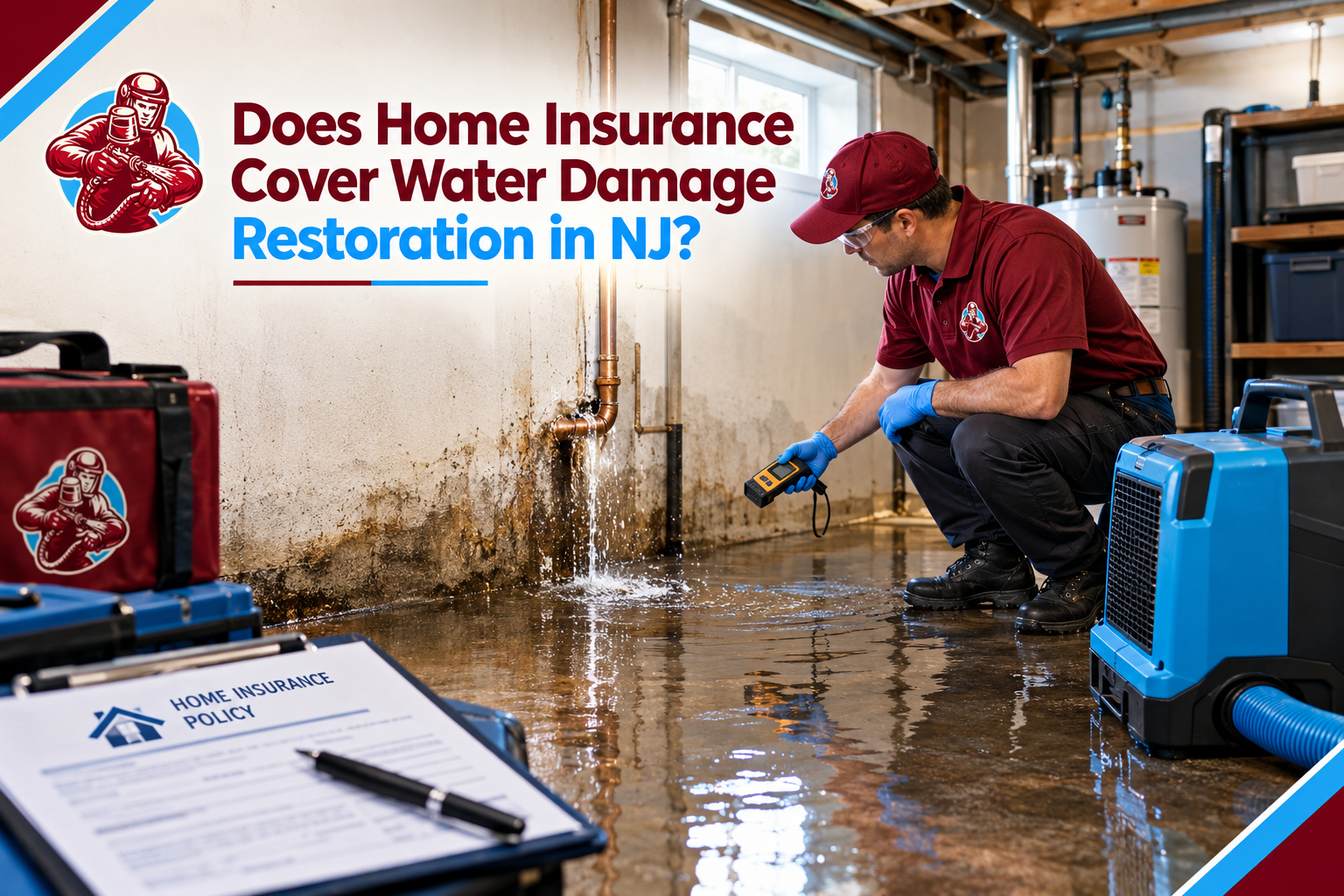
| QUICK ANSWER: Sometimes. New Jersey homeowners policies generally cover water damage that is sudden and accidental — a burst pipe, a failed water heater, a washing machine supply line that lets go, storm-driven rain through a damaged roof. They generally do not cover gradual damage, long-term seepage, groundwater, or flooding, and mold is usually capped at a few thousand dollars even when it is covered at all. The difference between a paid claim and a denied one usually comes down to one question: did this happen suddenly, or did it happen slowly? |
| SAFETY WARNING: We are a water damage restoration and mold remediation contractor, not insurance advisers. Coverage varies significantly between carriers and between policy forms, and terms change. Everything below is general information to help you ask better questions. Read your own declarations page and speak to your agent or carrier before relying on any of it. |
When water damage happens, homeowners often face two urgent questions:
- Will my insurance pay for the restoration?
- What should I do immediately to prevent more damage?
At MMRG Mold Remediation & Basement Waterproofing, Randy Cece brings over 25 years of experience in environmental restoration, water damage assessment, mold inspection, and moisture-related problems. His certified expertise helps New Jersey homeowners understand the source of water damage, document the condition of their property, and choose the right restoration approach.
How Does Home Insurance Cover Water Damage Restoration?
Home insurance coverage usually depends on the cause of the water damage, not simply the presence of water.
Insurance companies typically review:
- Where the water came from
- Whether the damage was sudden or gradual
- Whether maintenance issues contributed
- What type of coverage exists in the policy
- The extent of property damage
For example, a pipe suddenly bursting inside your home may be treated differently from water entering through foundation cracks over several months.
What Types of Water Damage May Be Covered by Insurance?
Coverage varies by policy, but many homeowners insurance plans may cover certain sudden and accidental water damage situations.
Examples may include:
Burst Pipes
A sudden pipe failure that causes water to spread through your home may qualify for coverage depending on your policy.
Accidental Plumbing Leaks
Unexpected leaks from plumbing systems may sometimes be covered.
Appliance-Related Water Damage
Damage caused by certain appliance failures, such as a washing machine hose breaking, may be covered under some policies.
Storm-Related Damage
Some storm-related water damage may be covered depending on how the water entered the property and the details of the policy.
What Water Damage Is Usually Not Covered by Home Insurance?
Many homeowners assume all water damage is covered. However, insurance policies often exclude certain situations.
Common exclusions may include:
Flood Damage From External Water Sources
Standard homeowner policies often do not cover flooding caused by rising water from outside the home.
Examples:
- River flooding
- Storm surge
- Groundwater flooding
- Surface water entering the property
Separate flood insurance may be required for some flood-related situations.
Long-Term Water Damage
Insurance may not cover damage caused by problems that developed slowly over time.
Examples:
- A small leak ignored for months
- Continuous moisture intrusion
- Poor maintenance issues
Foundation Water Problems
Water entering through foundation issues, drainage problems, or recurring basement moisture may require specialized solutions rather than standard insurance coverage.
This is where professional evaluation becomes important.
Does Flood Damage Insurance Cover Basement Flooding in NJ?
The answer depends on the source of the flooding.
Many homeowners confuse regular home insurance with flood insurance.
A typical homeowner policy may not cover certain flood situations involving:
- Heavy rainfall entering from outside
- Rising groundwater
- Natural flooding events
Flood insurance policies are designed specifically for certain flood-related risks.
If your basement floods, the first step is determining:
- Where the water came from
- Whether the damage is considered flooding or water damage
- What coverage applies
What Should You Do After Water Damage Before Filing a Claim?
Taking the right steps after water damage can help protect your property and support your insurance claim.
1. Stop the Source of Water
If possible and safe:
- Shut off the water supply
- Address the immediate leak source
- Prevent additional damage
2. Document the Damage
Take photos and videos of:
- Standing water
- Damaged materials
- Affected rooms
- Personal belongings
Documentation can help during the claim process.
3. Contact Your Insurance Company
Report the damage and ask about:
- Coverage details
- Required documentation
- Claim procedures
4. Contact a Professional Water Damage Restoration Service
Water damage can continue even after visible water is removed.
Professional restoration helps evaluate:
- Moisture levels
- Hidden water damage
- Drying requirements
- Potential mold risks
MMRG provides Emergency water damage restoration Service for homeowners dealing with urgent moisture problems throughout New Jersey.
How MMRG Helps With Water Damage Insurance Claims in NJ
Insurance decisions can be confusing, especially when homeowners are dealing with flooding, damaged belongings, and urgent repairs.
MMRG focuses on helping homeowners understand the actual condition of their property.
Founded by Randy Cece, MMRG combines:
- 25+ years of environmental restoration experience
- Water damage restoration expertise
- Certified mold assessment knowledge
- Indoor air quality training
- Microbial investigation experience
Unlike companies that focus only on removing visible water, MMRG evaluates the bigger picture:
- What caused the moisture problem?
- How far has the damage spread?
- Is mold growth a concern?
- What solutions can prevent future issues?
This environmental approach helps homeowners make informed decisions after water damage.
Water Damage Restoration vs Insurance Coverage: What Comes First?
Many homeowners wait for insurance approval before taking action.
However, delaying emergency response can allow damage to increase.
The priority is usually:
- Protect people and property
- Stop ongoing water damage
- Document conditions
- Begin necessary restoration steps
- Work with insurance regarding coverage
Professional restoration helps reduce further damage while homeowners navigate the claim process.
Preventing Future Water Damage After Restoration
Insurance coverage may help with certain damages, but preventing future problems is equally important.
Long-term prevention may include:
- Basement waterproofing
- Improved drainage
- Moisture control
- Foundation evaluations
- Regular inspections
If recurring basement water problems are the cause, restoration alone may not solve the issue.
MMRG helps New Jersey homeowners address both immediate water damage and long-term moisture prevention through Basement Waterproofing & Flood Cleanup NJ solutions.
Common Questions About Water Damage Insurance Claims in NJ
Does homeowners insurance cover water damage restoration?
Homeowners insurance may cover certain types of water damage restoration when the damage results from a sudden and accidental event. Coverage depends on the individual policy and cause of damage.
Does insurance cover basement flooding in NJ?
It depends on what caused the flooding. Damage from certain plumbing failures may be covered, while flooding from outside water sources often requires separate flood insurance.
Will insurance pay for mold removal after water damage?
Coverage for mold-related work depends on the cause of the mold and the details of the insurance policy. Homeowners should review their policy and discuss coverage with their insurer.
Should I call water restoration professionals before insurance?
Homeowners should take reasonable steps to prevent further damage. Contacting a professional restoration company can help assess the situation and begin necessary emergency measures.
How quickly should emergency water damage restoration begin?
Water damage should be addressed as soon as possible because moisture can spread and increase the risk of structural damage and mold growth.
Final Thoughts
Understanding whether insurance covers water damage restoration in NJ can be challenging because every situation depends on the source of the damage and the details of the policy.
The most important steps are identifying the cause, documenting the damage, preventing further problems, and working with experienced restoration professionals.
With more than 25 years of experience, certified environmental restoration expertise, and a focus on solving moisture problems at their source, Randy Cece and MMRG Mold Remediation & Basement Waterproofing help New Jersey homeowners navigate water damage situations with professional guidance and long-term solutions.
When water damage affects your home, the goal is not only cleanup — it is restoring your property and reducing the chance of future moisture problems.