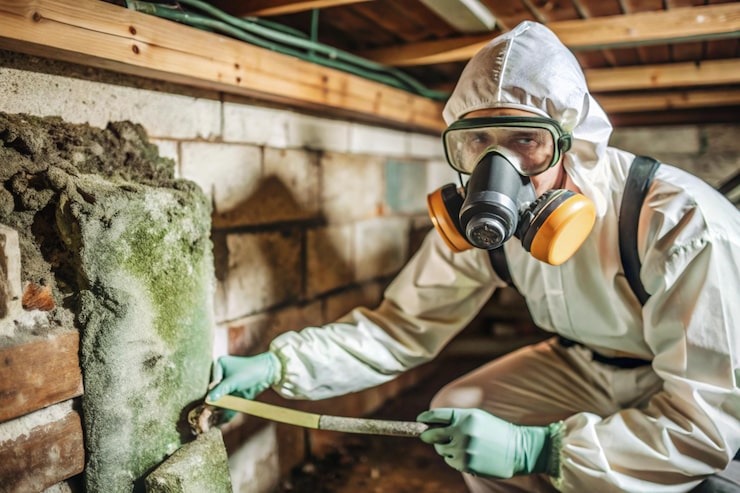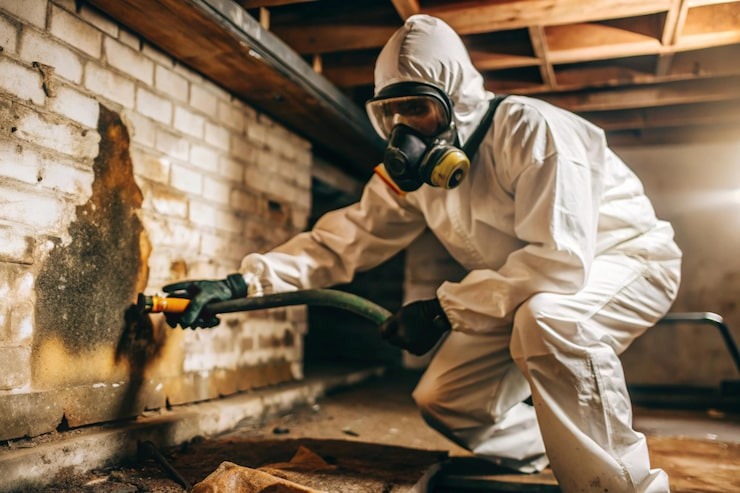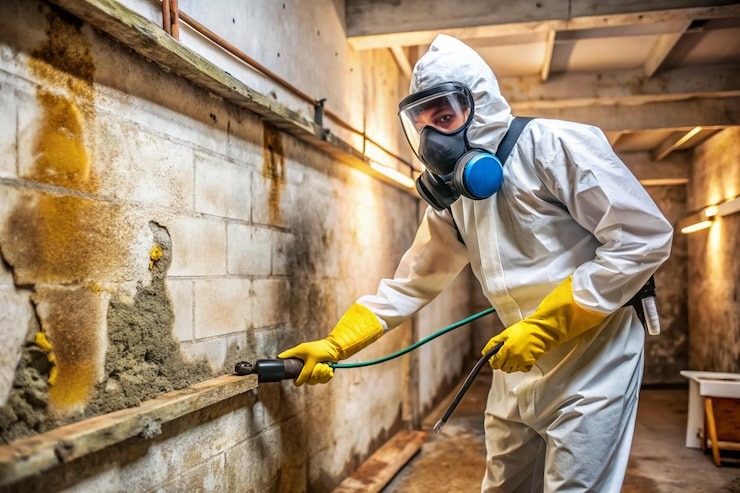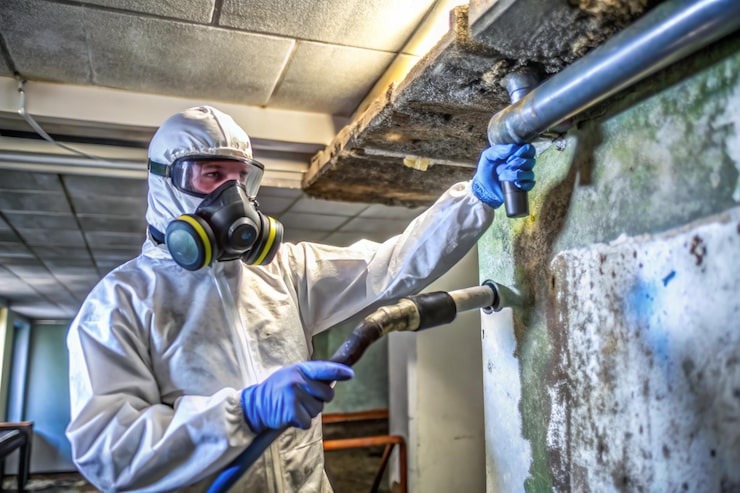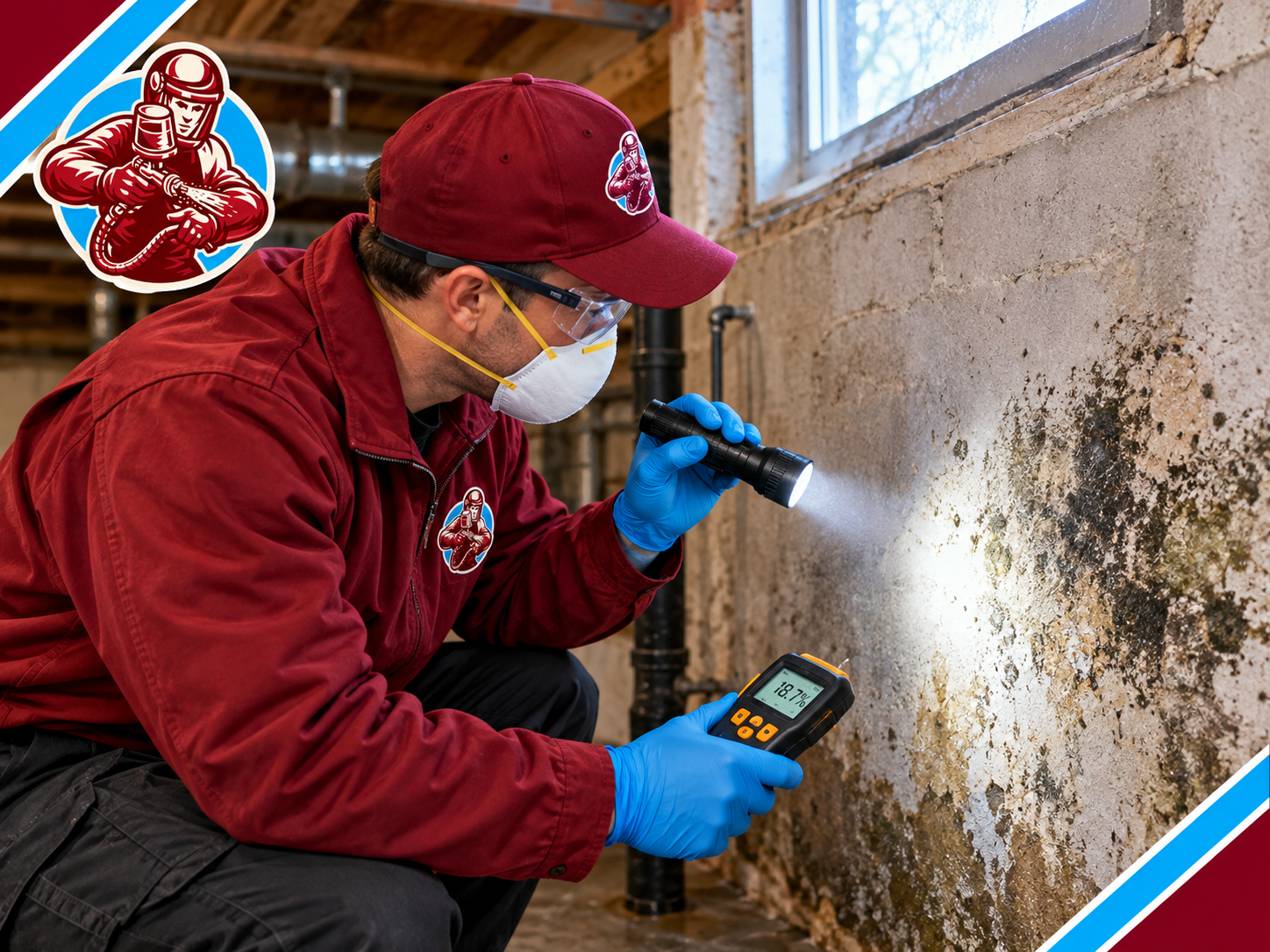
Basement mold removal in New Jersey typically costs $500 to $3,000 for a small, localized problem — one or two walls, caught early — and $3,000 to $9,000 or more when mold has spread across a larger area or followed flooding. Severe cases involving full drywall and framing replacement can run higher. The actual number depends on three things: how much area is affected, whether a water leak or flood caused it, and which company you hire.
This guide breaks the cost down by scope, explains what actually drives the price, and covers what the EPA says about handling small amounts of mold yourself — so you can tell whether a quote is reasonable before you agree to anything.
Basement Mold Removal Cost by Scope
Cost scales directly with the square footage affected, and New Jersey pricing tends to run at or above the national range because of local labor rates and the state’s older housing stock.
| Affected Area | National Range | NJ Range |
| 50–100 sq ft (1–2 walls) | $500 – $3,000 | $1,200 – $2,500 |
| 150–300 sq ft | $1,500 – $9,000 | $1,800 – $7,500 (est.) |
| 500 sq ft | $5,000 – $15,000 | $6,200 – $12,500 |
| 1,000 sq ft (whole basement) | $10,000 – $30,000 | $12,500 – $25,000 |
For context, Fixr’s data puts the national average basement remediation job (around 100–300 sq ft of actual mold growth in a roughly 1,000 sq ft basement) at $1,500 to $4,000, working out to roughly $10 to $30 per square foot. A narrower estimate from Homewyse puts basic mold cleaning — surface cleaning only, in easily accessible conditions, with no material removal — at $2.30 to $2.80 per square foot. That gap matters: a low quote using the basic-cleaning rate usually doesn’t include removing and replacing moldy drywall, insulation, or flooring, which is where most of the real cost in a basement job comes from.
For comparison, MMRG Mold Remediation & Basement Waterproofing’s own New Jersey pricing runs $1,000 to $3,000 for a problem contained to one or two walls, and over $6,000 for larger jobs — consistent with the independent data above, and higher again when waterproofing or active water management has to be added to stop the mold from returning.
What Drives the Cost Up or Down
Three factors do most of the work in moving the price:
- How much area is affected. A few square feet of surface mold on a single wall is a different job — and a different price — than mold that’s spread across framing, subfloor, and multiple walls.
- Whether a water leak or flood caused it. Mold from a slow, ongoing leak behind a wall usually means tearing out and replacing material. Mold from a one-time flood may be more extensive but more contained to surfaces, depending on how quickly it was addressed.
- Which company you hire. Pricing, scope definitions, and what’s included (testing, waterproofing, disposal) vary enough between companies that two quotes for the “same” job can look very different.
Mold type adds a smaller but real variable: Fixr’s data shows that toxic or hard-to-remove mold types, including black mold, can push remediation to 800–7,000+ depending on scope, compared to lower costs for common surface mold. Labor alone typically runs 75–120 per hour, and if drywall, insulation, or flooring has to be removed and replaced rather than cleaned, that work is priced on top of the remediation itself.
Can You Remove Basement Mold Yourself?
Usually only if the affected area is small. The EPA’s mold guidance sets roughly 10 square feet as the threshold: below that, most people can clean it themselves following standard precautions. Above 10 square feet, or if the problem is tied to significant water damage, the EPA recommends hiring an experienced contractor rather than tackling it as a DIY project.
A few EPA-specific cautions matter more in a basement than almost anywhere else in a house: don’t paint or caulk over a moldy surface before it’s fully cleaned and dried, never mix bleach with ammonia-based cleaners, and if mold is near an HVAC intake, don’t run the system until it’s been addressed. If you smell a musty odor but can’t find the source, the EPA’s guidance is to treat that as hidden mold and bring in a professional rather than guessing — disturbing a hidden colony (pulling back carpet or drywall, for example) can release a large number of spores at once.
How Basement Mold Removal Actually Works
A properly scoped job generally follows this sequence:
- Inspection. A technician assesses the extent of the mold and looks for the moisture source — not just the visible growth.
- Stop the water first. The actual leak or intrusion point gets addressed before anything else; treating the mold without fixing the water source means it comes back.
- Containment. The work area is sealed off to keep spores from spreading to the rest of the basement or house during removal.
- Removal and cleaning. Affected materials are either cleaned (non-porous surfaces) or removed and replaced (porous materials like drywall, insulation, or carpet that can’t be fully decontaminated).
- Drying and air scrubbing. Dehumidifiers and HEPA air scrubbers remove residual moisture and airborne spores.
- Resealing. Walls and surfaces are resealed or restored once the area tests dry, to make regrowth less likely.
Skipping step 2 is the single most common reason mold comes back after a paid remediation job — the surface problem gets cleaned, but the water keeps coming in.
Is Basement Mold Removal Covered by Insurance?
Usually not, at least not by itself. Standard homeowners insurance policies generally treat basement mold as a maintenance issue rather than a covered loss, since it’s typically the result of gradual moisture — condensation, a slow leak, high humidity — rather than a sudden, covered event. Flood-related mold is its own category: standard homeowners policies typically exclude flood damage entirely, which requires separate flood insurance to be covered.
There are exceptions. If the mold is a direct result of a sudden, covered peril — a burst pipe or storm damage, for example — remediation may be covered as part of that claim. It’s worth calling your insurer before starting work if there’s any chance the cause qualifies, since documentation (photos, an inspection report) collected before remediation starts is usually what a claim depends on.
Emergency Basement Mold Removal Cost in NJ
“Emergency” in this context almost always means a basement that just flooded or took on significant water, where mold risk is climbing by the hour rather than mold that’s already fully established. The EPA recommends drying wet materials within 24 to 48 hours of a leak or flood specifically to prevent mold from taking hold in the first place — so fast response here isn’t just about convenience, it’s often the difference between a straightforward drying job and a full remediation job.
Most New Jersey mold and water-damage companies can accommodate same-day or next-day emergency response after a flood, though guaranteed same-day availability varies by company and season. Acting within that EPA window can keep costs on the lower end of the ranges above by preventing mold from spreading past a contained area — waiting past it tends to push a job from the 1,000–3,000 range toward the $6,000+ range as the affected area grows.
Common Mistakes That Drive Up the Cost
- Painting or caulking over mold instead of removing it. It happens because the surface looks better immediately, but paint traps moisture and mold underneath, and the problem resurfaces — usually after the paint job has already cost time and money that now has to be redone alongside the actual remediation.
- Cleaning the mold without fixing the water source. This happens when a quote only covers visible cleanup. The mold returns, often within weeks, and the homeowner ends up paying for remediation twice.
- Using bleach on basement mold. Bleach is a common DIY instinct, but it can react with compounds mold produces and isn’t recommended for porous surfaces; it also doesn’t address the moisture that’s feeding the growth.
- Waiting on a musty smell with no visible mold. This usually happens because there’s nothing to point to yet. By the time it’s visible, it may have spread behind walls or under flooring, turning a contained job into a larger, more expensive one.
How to Get an Accurate Price
The ranges above are a starting point, not a quote — the only way to know the real number for your basement is an in-person inspection that identifies both the mold and its water source. MMRG Mold Remediation & Basement Waterproofing offers a free estimate for New Jersey basement mold jobs, backed by a 10% price-match guarantee against other licensed NJ contractors. Inspections and remediation work are handled by Randy Cece, a certified mold assessor with documented training dating back to 2002. Visit the Basement Mold Removal Service page or call 908-601-1307 to schedule an inspection and get a price based on your actual basement, not a generic range.
FAQ
How long does basement mold removal take?
A small, contained job (one or two walls) usually takes 1–3 days, including drying time. A larger job involving material removal, waterproofing, or a full basement can take a week or more, depending on how long the area needs to dry before resealing.
Will basement mold come back after removal?
Only if the moisture source wasn’t fixed. Removal without addressing the water intrusion — a leak, poor drainage, or chronic high humidity — almost always leads to regrowth, which is why a thorough quote includes finding and fixing the source, not just cleaning the mold itself.
Is black mold in a basement more dangerous than other basement mold?
The EPA doesn’t single out black mold (often Stachybotrys) as inherently more hazardous than other mold types in terms of health effects — all mold exposure can trigger allergic or respiratory symptoms in sensitive individuals, and the agency’s guidance focuses on removing the growth rather than identifying the species. The main practical reason black mold often costs more to remediate is that it’s associated with persistent, high-moisture conditions, which tend to mean more extensive damage by the time it’s addressed.
Do I need to replace drywall after basement mold removal?
Only the drywall that’s actually contaminated and can’t be fully cleaned. Non-porous surfaces can often be cleaned and treated in place; porous materials like drywall, insulation, and carpet that have absorbed mold growth typically need to be removed and replaced rather than cleaned.
What happens if basement mold isn’t removed?
It typically spreads as long as the moisture source remains, moving from a contained area to adjacent walls, framing, or flooring. Beyond the growing remediation cost, prolonged exposure can aggravate allergies, asthma, and other respiratory sensitivities for people spending time in the space.