
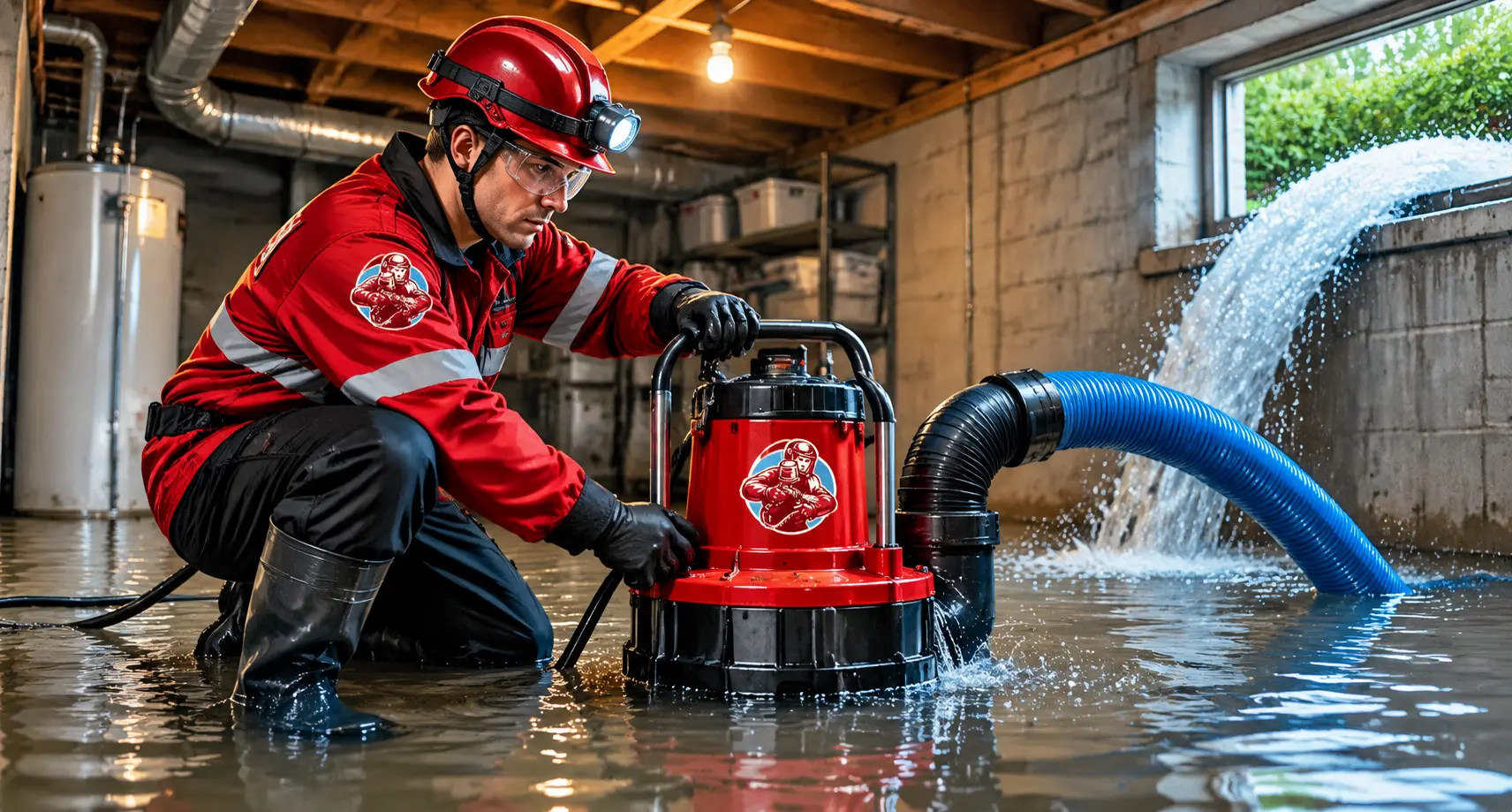
Residential water extraction in New Jersey typically costs $500 to $3,000 for most homes, the range MMRG publishes for its NJ residential work. Nationally, extraction runs about $3.75 to $7.50 per square foot, depending on how contaminated the water is. Larger jobs, sewage, or extraction combined with drying and repairs cost more. A full flooded-basement cleanup averages about $4,000 nationally.
Water on the floor right now? MMRG offers 24/7 emergency water extraction across New Jersey: call 908-601-1307.
Water Extraction vs. Water Damage Restoration
Water extraction is the first stage: pumping out standing water and pulling water out of carpet, padding and other materials. Restoration is everything after that, including drying the structure, removing damaged materials, cleaning, and rebuilding drywall or flooring.
That difference explains why prices online swing from a few hundred dollars to tens of thousands. Before you compare quotes, check whether each one covers extraction only, extraction plus drying, or the full restoration.
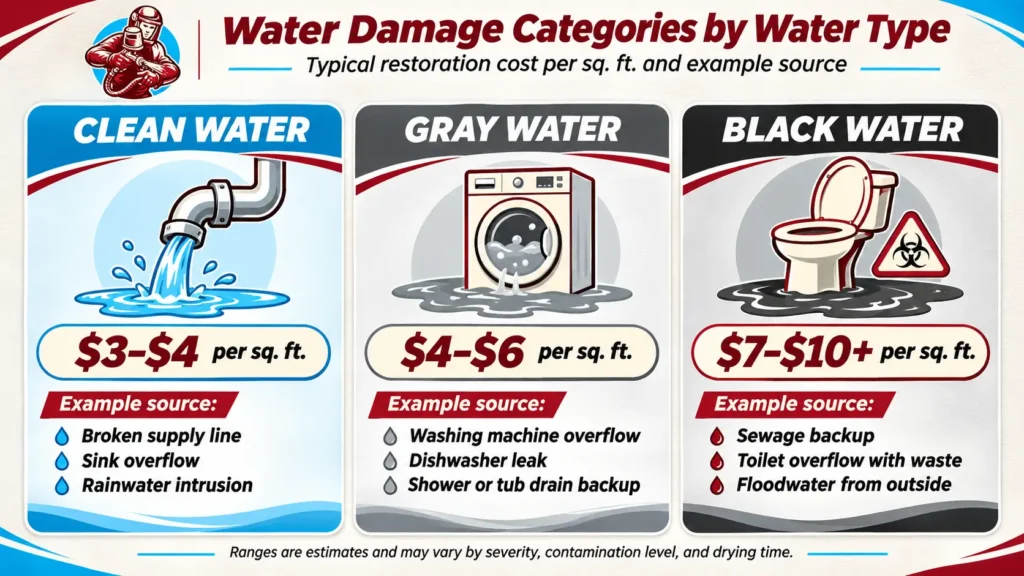
Water Extraction Cost by Water Type
The type of water affects price more than almost anything else, because contaminated water needs more protective gear, more disposal and disinfection.
| Water type | Typical sources | Extraction cost per sq ft |
| Clean (Category 1) | Burst supply pipe, overflowing sink or tub, water heater leak | $3.75 – $4.25 |
| Gray (Category 2) | Washing machine or dishwasher discharge, sump pump failure | $4.10 – $6.50 |
| Black (Category 3) | Sewage backup, outside floodwater, storm surge | $7.00 – $7.50 |
Worked example: water covering 600 square feet of a basement.
- Clean water from a burst pipe: 600 × 3.75–4.25 = $2,250 to $2,550
- Sewage backup: 600 × 7.00–7.50 = $4,200 to $4,500 for extraction alone, before throwing away contaminated materials
Sewage also changes what can be saved. Public-health guidance generally treats porous materials soaked by sewage, such as carpet padding, upholstered furniture and cardboard, as items to discard rather than dry.
Flooded Basement Water Removal Cost by Size
For full flooded-basement cleanup, which includes extraction and cleaning but not repairs, national figures run:
| Basement size | Cleanup cost |
| 500 sq ft | $1,500 – $3,500 |
| 1,000 sq ft | $3,000 – $7,000 |
| 2,000 sq ft | $6,000 – $14,000 |
These totals are higher than extraction-only prices because they include cleaning and removing damaged materials. MMRG typically extracts a residential basement in 3 to 6 hours. Drying the structure afterward takes days.
What Drives the Price Up or Down
- Water category: clean water is cheapest; sewage is the most expensive.
- Area and depth: more square footage and deeper standing water mean more pumping and more labor.
- Materials: carpet and pad, finished drywall and insulation hold water. Bare concrete doesn’t.
- Time since the water entered: the longer it sits, the more it soaks into walls and subfloors, and the more drying, removal and mold risk you’re paying for.
- Access: tight basements, crawl spaces and multi-level homes take longer.
- Timing of the call: nights, weekends and holidays can add an emergency fee with some companies.
- Drying equipment and duration: dehumidifiers and air movers are usually billed per day on top of extraction.
Labor typically runs $70 to $200 an hour nationally .
Does Emergency Water Removal Cost More?
Sometimes, a little. Fixr reports emergency service-call fees of $50 to $200 at some companies. That’s small compared with the cost of waiting. The EPA advises removing and discarding anything that has stayed wet for more than 24–48 hours. Once you’re past that window, the job grows from extraction into material removal and possibly mold remediation, which can cost several times more.
Ask any emergency water removal company two questions on the phone: do you charge an after-hours fee, and how soon can a crew arrive?
Commercial Water Extraction Services
Commercial water extraction usually costs more than residential work because of larger areas, commercial flooring, business interruption, and often after-hours work to reopen faster. Pricing is almost always quoted per job after an assessment. MMRG handles both residential and commercial extraction. Its published 500–3,000 range applies to residential work, and commercial jobs may cost more.
Does Insurance Cover Water Extraction?
Often, if the cause is sudden and covered, such as a burst pipe or a water heater failure. Homeowners policies generally exclude gradual leaks, and flooding from outside needs separate flood insurance. Even then, FEMA’s guidance on NFIP flood policies says basement coverage includes cleanup and essential equipment like sump pumps, furnaces and water heaters, but not finished walls, floors or carpet . Sewage backup coverage often requires a separate endorsement. Photograph everything before extraction starts, and call your insurer early.
How to Choose a Water Extraction Company
Water extraction companies vary widely in equipment, response time and what they include. Before you hire, check:
- 24/7 availability, plus a realistic arrival time, not just “fast response”
- Commercial-grade equipment: high-capacity pumps and extractors, dehumidifiers, air movers and moisture meters
- Certifications: IICRC is the industry standard for water damage. Ask who on the crew holds it
- A written scope that separates extraction, drying and restoration
- Moisture readings to confirm drying, not “it feels dry”
- A mold check after drying, since hidden moisture is where mold starts
- Insurance documentation: photos, moisture logs and an itemized invoice your insurer will accept
- Proof of liability insurance
The best emergency water extraction experts don’t stop at the pump. The team that dries your home should also verify that it’s dry and check it for mold.
Get Help Now
MMRG Mold Remediation & Basement Waterproofing provides 24/7 emergency water extraction across New Jersey. Residential extraction typically runs $500 to $3,000, and you get a free inspection with a detailed report before work begins. MMRG holds IAQ, ESA and IICRC certifications and offers a 10% price-match guarantee.
MMRG also handles what comes after: structural drying, a post-extraction mold risk assessment, mold remediation, and basement waterproofing to stop the next flood. Mold assessments are led by Randy Cece, a Certified Mold Assessor (EAA) and Indoor Air Quality Technician (ESA) with documented training dating back to 2002. One company, no handoffs.
Water in your home right now? Call 908-601-1307, day or night, or visit our Emergency water damage restoration page.
I. FAQ
How long does water extraction take?
Pumping and extraction usually take hours, not days. MMRG typically extracts a residential basement in 3 to 6 hours. Structural drying afterward usually takes several days and should be confirmed with moisture readings.
Can I extract water myself with a shop vac?
For a small clean-water spill, yes. You can rent a wet/dry vac for about $150 a day or buy one for around $250 (HomeAdvisor). A shop vac can’t pull water out of carpet padding, wall cavities or subfloors, and it’s not safe for sewage or floodwater. For more than a small area, professional extraction and drying cost less than the damage that hidden moisture causes later.
Is drying included in the extraction price?
Not always. Some companies quote extraction only and bill drying equipment per day. Others bundle them. Ask for a written scope that lists extraction, drying equipment and how long it will run, plus any material removal.
Will I need mold remediation after water extraction?
Not if the area is extracted and fully dried within the first 24–48 hours. If water sat longer, or reached walls and subfloors that weren’t dried, ask for a mold check once drying is complete.
Do I need to be home during water extraction?
Someone usually needs to let the crew in, point out the water source and approve the scope. After that, extraction and drying equipment can run while you’re away, though the crew will come back to check moisture readings.