
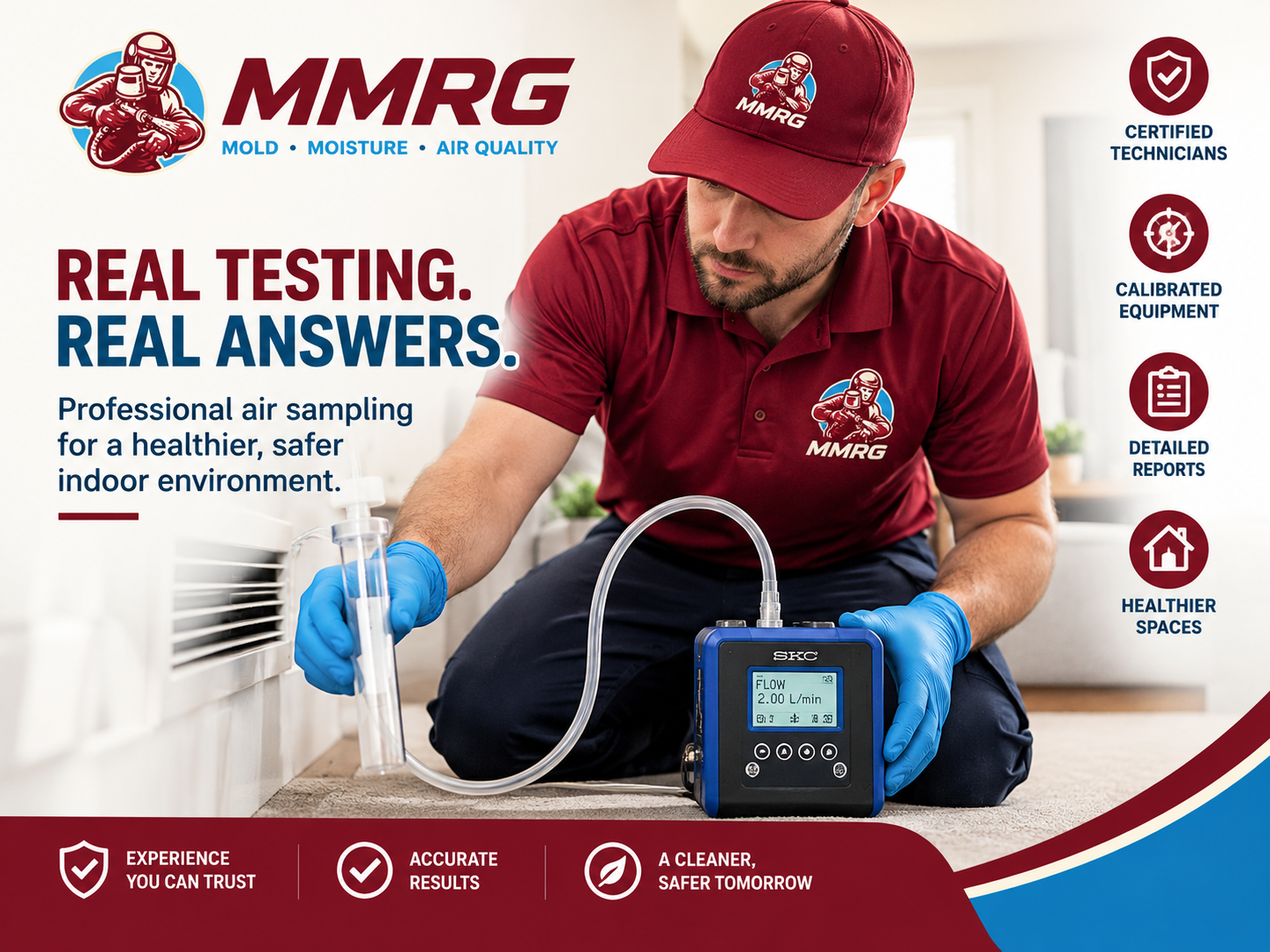
Mold testing in New Jersey typically costs $300 to $1,000 for a standard inspection with air and surface sampling, with the on-site visit alone running $150 to $500 and individual lab-analyzed samples adding $75 to $350 each depending on sample type. A single post-remediation clearance test, done to confirm a cleanup worked, usually costs less — $100 to $300.
Before paying for any of that, it’s worth knowing what the EPA itself says: “In most cases, if visible mold growth is present, sampling is unnecessary.” If you can see the mold, testing often won’t tell you anything that changes what you need to do next — remove it and fix the moisture causing it. Testing earns its cost in a narrower set of situations, and knowing which one you’re in is the real question behind “how much does mold testing cost.”
Average Mold Testing Cost in NJ
| Service | Typical NJ Cost |
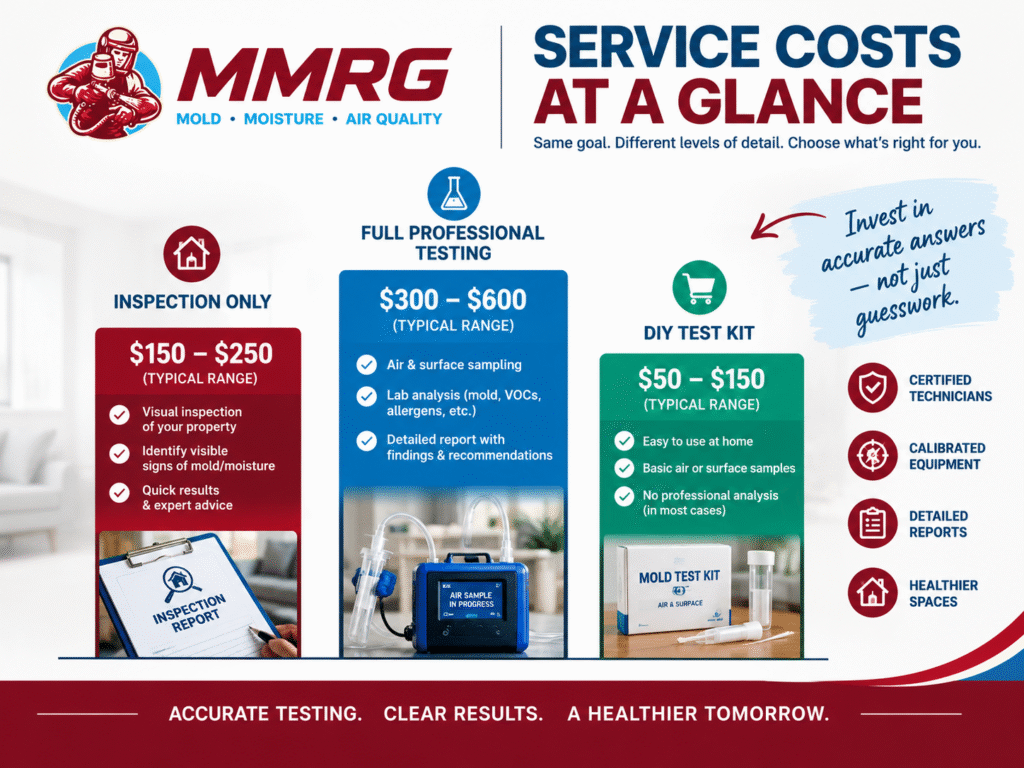
| Visual mold inspection (no sampling) | $150 – $500 |
| Full testing (inspection + sampling + lab analysis) | $300 – $1,000 |
| Air sample (lab fee) | $250 – $350 |
| Surface/swab sample (lab fee) | $200 – $300 |
| Additional sample beyond the base package | $75 – $150 each |
| Post-remediation clearance test | $100 – $300 |
| Rush lab turnaround (24–48 hr) | +$25 – $75 per sample |
These figures reflect national cost data from Angi and HomeAdvisor, cross-checked against current market pricing. Larger homes and jobs requiring multiple sample locations — basement, attic, HVAC — land at the higher end.
Do You Actually Need Mold Testing?
Often, no — not if you can already see the mold. The EPA’s guidance on mold sampling states that sampling is unnecessary in most cases where mold growth is visible, partly because there’s no federal standard for “how much mold” is acceptable to compare a sample against. In that situation, the useful next step is removing the mold and fixing the moisture source, not paying for a lab report that won’t change the plan.
Testing is worth the cost in a narrower set of situations:
Confirming a cleanup actually worked — surface sampling after remediation is one of the situations the EPA specifically calls useful, since it verifies a space was adequately cleaned rather than just visually clear.
Hidden mold you suspect but can’t see — behind drywall, under flooring, inside a wall cavity — where testing, often air sampling, confirms whether there’s a problem before anyone starts tearing into finished space.
Real estate transactions or insurance claims that specifically require a written lab report as documentation, not just a visual assessment.
A disagreement about whether a stain or discoloration actually is mold, where a swab sample settles the question instead of guessing.
Mold Inspection Cost vs. Mold Testing Cost
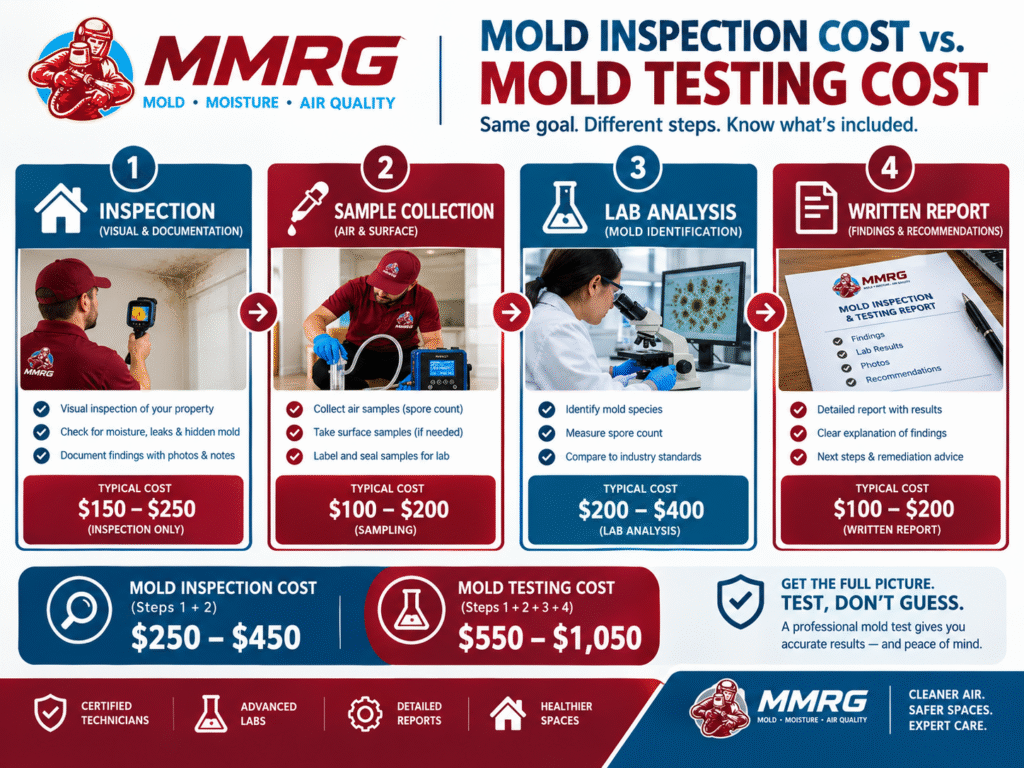
These aren’t the same service, and conflating them is where a lot of cost confusion starts. A mold inspection is a visual and moisture assessment — someone walks the property, checks problem areas with a moisture meter, and tells you what they see. It typically runs $150 to $500 on its own.
Mold testing adds sample collection and lab analysis on top of that inspection — air samples, surface swabs, sometimes PCR/ERMI DNA testing — which is where the $75 to $350 per-sample lab fees come in. An inspection with no testing can cost several hundred dollars less than one that includes two or three lab-analyzed samples, which is why “mold inspection cost” and “mold testing cost” searches can return very different numbers depending on which service a company is actually quoting.
DIY Mold Test Kits vs. Professional Testing Cost
A basic DIY mold test kit costs $15 to $50 and tests for a single contaminant with no lab fee included. Multi-test kits that include some lab work run $50 to $150, and pro-grade kits that require separate lab analysis run $100 to $300 — often landing close to what a professional’s base sample fee costs once the lab fee is added in.
The real difference isn’t price, it’s reliability. A kit relies on the homeowner to collect the sample correctly, and a poorly collected sample — wrong exposure time, a contaminated control, the wrong location — produces results a lab can’t meaningfully interpret. A professional sample is collected with a calibrated pump, a matched non-viable control, and documented technique, which is what makes the result usable for a closing, a claim, or a clearance report. For a quick “is something off in this one room” check, a DIY kit can be a reasonable starting point. For anything that needs to hold up as documentation, professional sampling is the one that actually does.
What Affects Mold Testing Cost in NJ
Number of samples is the biggest line item — a single air sample might run $250 to $350, but a thorough test of a multi-room issue (basement, attic, living space, HVAC) can mean four or five samples, each billed separately.
Sample type matters: air sampling and surface swabs are priced differently, and PCR/ERMI DNA testing is typically a separate, higher-cost line item than a standard culture sample.
Home size and number of problem areas extend both the on-site visit and the number of samples needed to cover them.
Suspected black mold can raise cost slightly due to the added containment and PPE precautions taken during sample collection, similar to how it affects remediation pricing.
Lab turnaround speed: standard results typically take 2 to 5 business days; rushing results to 24–48 hours typically adds $25 to $75 per sample.
Emergency Mold Testing Service Cost in NJ
“Emergency” in mold testing usually means two different things, and they’re priced differently. The first is urgency of scheduling — getting someone out same-day or next-day after a flood, a burst pipe, or ahead of a real estate closing deadline, which most NJ testing companies can accommodate without a separate flat “emergency fee,” though same-day availability isn’t always guaranteed. The second is rush lab turnaround — paying $25 to $75 per sample extra to get results back in 24 to 48 hours instead of the standard 2 to 5 business days, which matters when a closing date or an insurance deadline is driving the timeline.
If you’re testing because of active water damage, the faster — and usually cheaper — move is often addressing the moisture and visible mold immediately rather than waiting on lab results to start, consistent with the EPA guidance above, and reserving rush testing for situations where a written report is specifically required by a deadline.
Why This Matters More With a Testing Company Than a Remediation Company
A mold inspection and testing business has a financial incentive a remediation company doesn’t always share as directly: more tests sold is more revenue, whether or not the testing changes anything about what needs to happen next. That’s worth knowing before agreeing to a multi-sample testing package.
MMRG Mold Remediation & Basement Waterproofing’s approach runs against that incentive: testing is recommended only where it adds real information — confirming a cleanup worked, checking a suspected hidden source, or producing documentation a sale or claim actually requires — not as a default add-on to every visit. Inspections and sample collection are handled by Randy Cece, who holds certifications across five accrediting bodies, including Certified Mold Assessor (EAA) and Indoor Air Quality Technician (ESA), with documented training dating back to 2002, and samples are sent to a qualified New Jersey lab for analysis.
Request mold testing cost details and sampling options on the mold testing cost page, or call 908-601-1307 to discuss whether testing is actually the right next step for what you’re seeing.
FAQ
How long does it take to get mold test results back?
Standard lab turnaround is typically 2 to 5 business days from when the lab receives the samples, not from the day of collection. Rush turnaround (24–48 hours) is usually available for an added $25 to $75 per sample.
Is mold testing covered by homeowners insurance?
Rarely as a standalone service. Insurance is more likely to cover testing when it’s part of documenting damage from a covered peril, like a burst pipe or storm — similar to how mold remediation coverage works. It generally doesn’t cover testing tied to gradual, maintenance-related moisture issues. Check your specific policy.
What counts as a “normal” mold spore count?
There isn’t one. The EPA has not set a federal standard for acceptable mold or spore levels, which is part of why it says sampling can’t be used to check compliance with any official limit. A lab report typically compares indoor results to outdoor air as a baseline, not to a pass/fail number.
Does a home inspector’s mold check count as professional mold testing?
Usually not in the way a dedicated mold inspection does. A general home inspector typically does a visual check as part of a broader inspection, not calibrated air or surface sampling with lab analysis. If a sale or claim specifically requires lab-documented results, a separate mold testing appointment is usually necessary.