
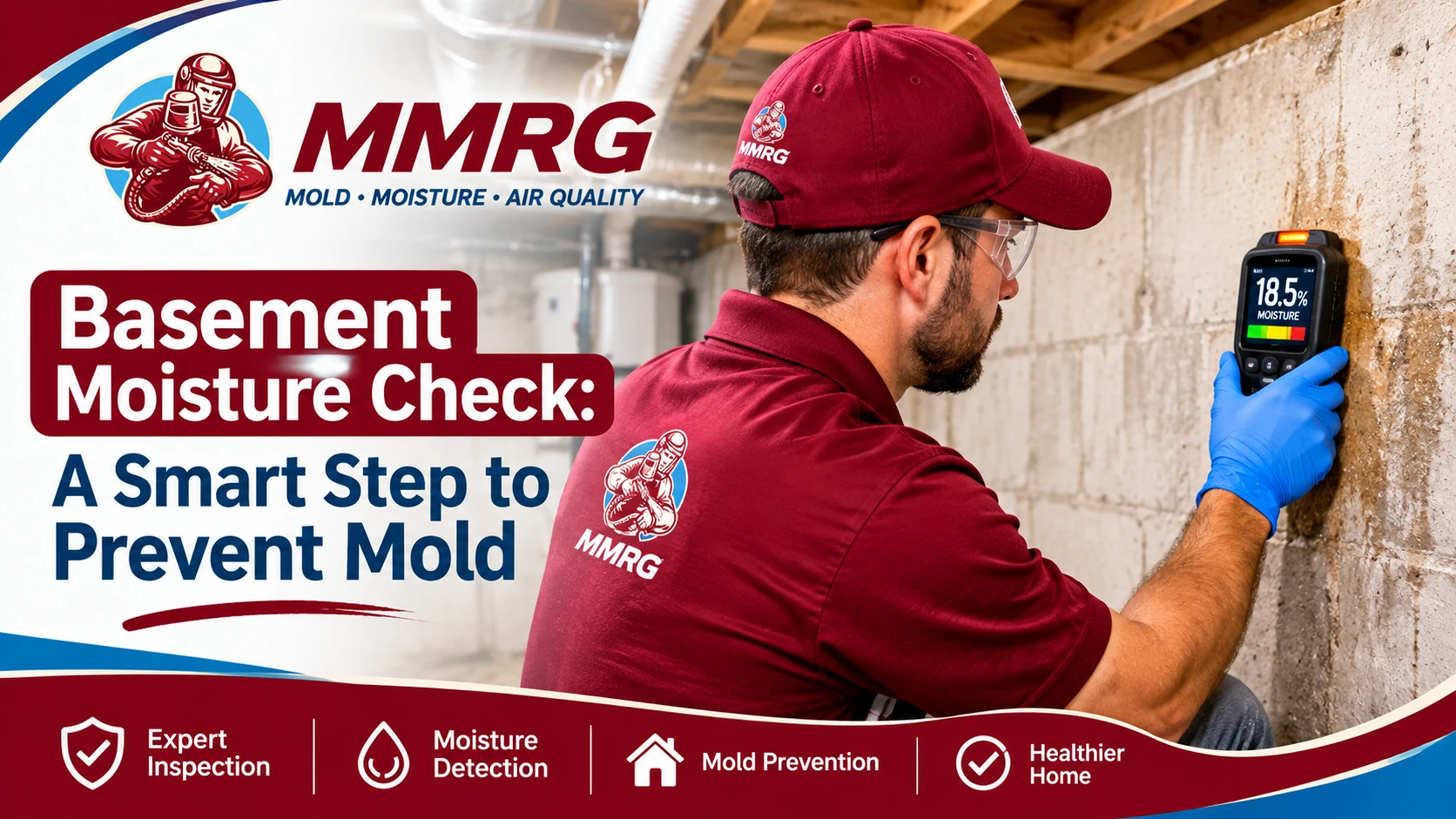
A mold inspection is an on-site assessment by a trained inspector that finds where mold is growing, what moisture is feeding it, and how much of the home is affected. The inspector looks, measures moisture and humidity, checks likely hidden areas, and then recommends what needs to be fixed. Lab sampling is sometimes part of it, but it isn’t the core of the job.
That last point is where many homeowners get confused, and sometimes overcharged. This guide explains what a good inspection includes, how the process works, when testing is and isn’t worth paying for, and what to look for in an inspector in New Jersey.
Why a Mold Inspection Is Important
Mold is the symptom. Moisture is the problem. Mold grows wherever water collects or humidity stays high, so cleaning mold without finding the water source almost guarantees it comes back. The most valuable thing an inspection produces is the answer to “where is the water coming from?”
An inspection also sets the scope. It tells you whether you’re dealing with a few square feet you can clean yourself or a problem that needs professional remediation. The EPA puts that line at roughly 10 square feet. Without an inspection, you’re guessing at both the size of the job and its price.
What Does a Mold Inspection Include?
A professional mold inspection should cover:
- A history interview: past leaks, flooding, roof or plumbing repairs, when the smell started, and who in the home has symptoms.
- A visual walkthrough: basement, crawl space, attic, bathrooms, kitchen, laundry, windows, HVAC equipment and anywhere water has been.
- Moisture readings: a moisture meter on walls, floors and framing to find materials that are wetter than they should be.
- Humidity and temperature readings: relative humidity above 60% supports mold growth. The EPA recommends keeping it below 60%, ideally 30–50%.
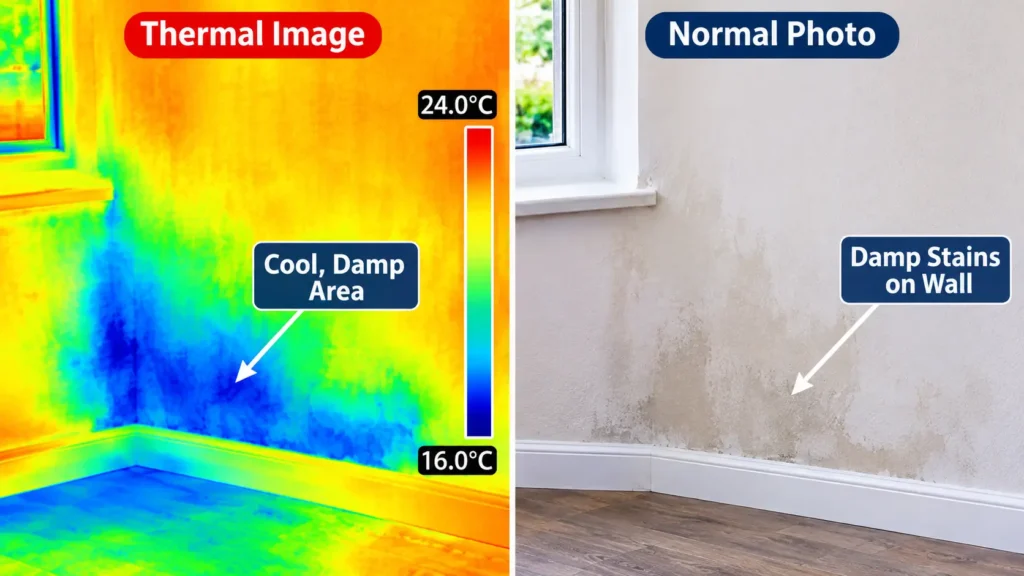
- Checks for hidden mold: thermal imaging to spot cold, damp areas, and a borescope to look inside wall cavities through a small hole.
- Sampling, only when it answers a question: air or surface samples sent to a lab (see the comparison below).
- Findings and a recommended scope: what’s affected, what’s causing it, and what should happen next.
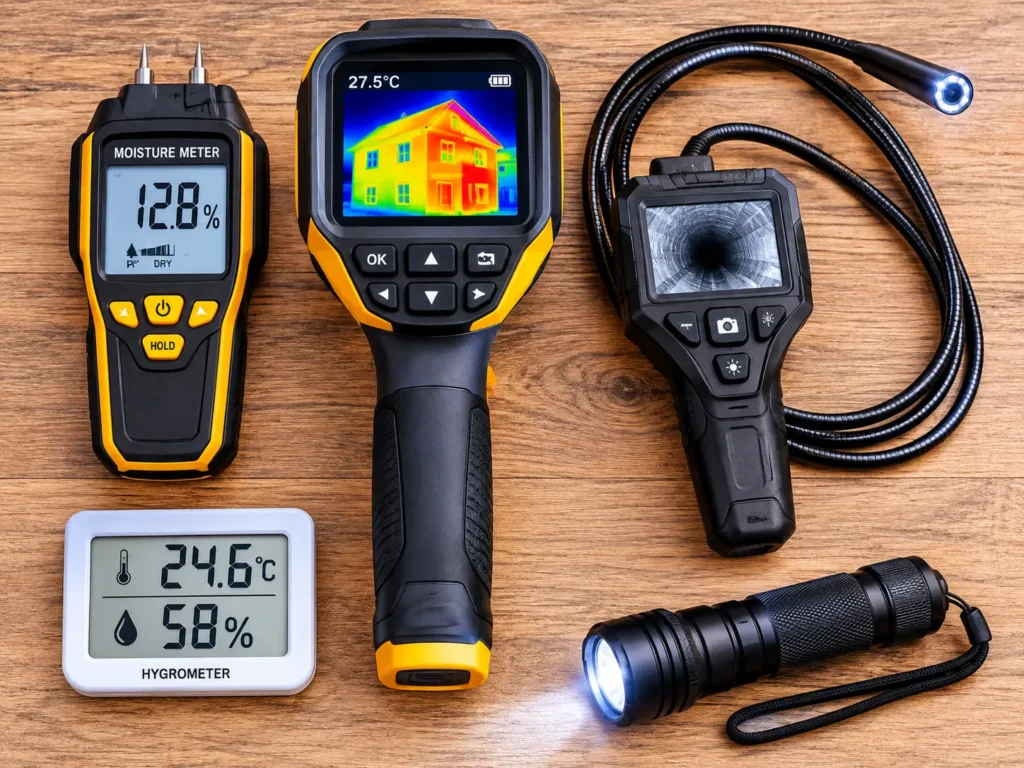
The tools used at MMRG Mold Remediation & Basement Waterproofing reflect that list: flashlights and black lights, moisture meters, relative humidity meters, thermometers, borescopes, thermal imaging and particle counters, with everything documented on inspection forms and photographed.
The Mold Inspection Process, Step by Step
- Talk through the history. The inspector asks what you’ve noticed and when. A smell that gets worse after rain points somewhere different from one that’s worse when the AC runs.
- Walk the house, starting where water lives. Basements, crawl spaces, bathrooms and the areas under past leaks come first.
- Measure. Moisture meter readings and humidity levels show which materials and rooms are wetter than normal, even where nothing is visible.
- Look behind surfaces without tearing them open. Thermal imaging narrows down suspect areas, and a borescope can confirm growth inside a wall cavity through a small hole.
- Decide whether sampling is needed. If mold is visible and the cause is clear, sampling usually adds cost without changing the plan.
- Explain the findings. You should leave knowing where the mold is, what’s causing it, how large the affected area is, and the recommended next step.
For a typical home, the visit usually takes one to a few hours, depending on the home’s size and how many areas need checking.
Mold Inspection vs. Mold Testing
These terms are often used interchangeably, but they aren’t the same thing.
| Mold inspection | Mold testing (sampling) | |
| What it is | An on-site assessment of mold, moisture and scope | Air or surface samples analyzed by a lab |
| Answers | Where is it, why is it there, how big is it? | What’s in this air or on this surface, and how much? |
| When it’s needed | Any time you suspect mold or water damage | When it changes a decision: confirming hidden mold, documentation for a sale or claim, or checking a cleanup worked |
| When it’s not needed | Rarely skipped | Usually when mold is already visible |
The EPA is direct about this: “In most cases, if visible mold growth is present, sampling is unnecessary” (EPA). If mold is visible and the source is known, the plan is to fix the moisture and remove the mold. Knowing the species doesn’t change that. Be cautious with any company that makes lab testing a mandatory add-on to every visit.
How Inspectors Find Hidden Mold
Hidden mold grows where you can’t see it: behind drywall, under flooring, inside wall cavities, above ceiling tiles, in ductwork and in crawl spaces. The usual clue is a persistent musty smell with no visible source. The EPA recommends bringing in an experienced professional when you suspect hidden mold. Opening up materials yourself, such as pulling off wallpaper or cutting drywall, can release large numbers of spores.
A good inspector narrows the search before anything gets opened. Here’s a common example. A finished basement smells musty, but the walls look clean. Moisture readings come back high along the bottom foot of one wall, thermal imaging shows a cool, damp band there, and a borescope through a small hole shows growth on the back of the drywall. The cause is water seeping in where the wall meets the floor. The fix is the water entry first, then that section of wall, not the whole basement.
Signs You Need a Mold Inspection
- A musty or earthy smell that keeps coming back, especially in basements, closets or after rain
- Visible spots or fuzzy growth on walls, ceilings, grout, window frames or stored items
- Water stains, peeling paint, bubbling drywall or warped flooring
- A leak, flood, burst pipe or sewage backup, even one that seemed dried out
- Condensation that keeps forming on windows, pipes or walls
- Indoor humidity that stays above 60%
- Allergy-like symptoms that ease when you leave the house
- A home inspection report that mentions moisture, staining or “possible microbial growth”
When to Get a Mold Inspection
- After any water event. The EPA recommends drying wet materials within 24 to 48 hours. If that window passed, or you’re not sure everything dried, get it checked.
- Before buying a home, especially one with a finished basement, a crawl space or a history of water problems.
- Before selling, if you know about past water issues and want a clear scope and number before buyers find it.
- After remediation, to confirm the work and the moisture fix held.
- When symptoms don’t match what you can see, such as a persistent smell or health complaints with no visible cause.
Emergency Mold Inspection Service
Two situations make a mold inspection urgent. The first is fresh water damage, such as a flooded basement, a burst pipe or a storm leak. The longer materials stay wet, the more likely mold takes hold and the bigger the job gets. The second is a real estate deadline, where an inspection contingency or a buyer’s report leaves days, not weeks, to get a scope and a price.
In either case, explain the timeline when you book. For water damage, start drying right away: remove standing water, run fans and a dehumidifier, and pull out soaked carpet and padding. Then have the moisture checked so hidden wet areas don’t turn into hidden mold.
Mold Inspection in New Jersey
New Jersey doesn’t license mold inspectors. Bills to require state certification have been introduced repeatedly, including S574 in 2020 and S1030 in 2024, but none of the records we reviewed shows one passing. In practice, almost anyone can call themselves a mold inspector in NJ. Check credentials yourself:
- National certifications for mold assessment or indoor air quality, and from which organization
- Proof of liability insurance
- Whether they explain when testing is and isn’t needed, instead of selling it by default
- Whether they look for the moisture source, not just the mold
- A written or clearly explained scope at the end
Local conditions matter too. In Monmouth County shore towns like Long Branch and Rumson, humid summers and storm flooding put basements and crawl spaces at higher risk. In Holmdel, Middletown, Eatontown and other inland towns, the main risk shifts from storm flooding to everyday moisture in finished basements, bathrooms and HVAC systems, where mold often hides behind drywall and under carpet. MMRG is based in Ocean Township and serves Monmouth County, including Holmdel, Eatontown, Middletown, Long Branch and Rumson, as well as Edison in Middlesex County and towns across New Jersey.
What You Should Get at the End of an Inspection
- Where mold was found, and roughly how much (square footage)
- The moisture source, or the most likely one
- Moisture and humidity readings for the problem areas
- Photos of what was found
- Whether sampling was done, and why or why not
- A recommended next step: DIY cleanup, professional remediation, a moisture repair, or nothing
If you don’t get these, ask for them. An inspection that ends with a sales pitch but no clear findings hasn’t done its job.
Book a Mold Inspection Service
MMRG Mold Remediation & Basement Waterproofing offers free mold inspections across New Jersey, and the cost isn’t quietly added to any later contract. Inspections are led by Randy Cece, a Certified Mold Assessor (EAA) and Indoor Air Quality Technician (ESA) with documented training dating back to 2002. MMRG is licensed, insured, and holds ESA, EAA, IAQ and IICRC accreditations. You’ll get a clear explanation of what’s there, what’s causing it and what it will take to fix, with no lab tests you don’t need and no upsell. If remediation is needed, the work is backed by a 10% price-match guarantee against other licensed NJ contractors.
Smell something musty, or dealing with fresh water damage? Book through our Emergency mold inspection Service page or call Randy at 908-601-1307.
FAQ
How long does a mold inspection take?
Usually one to a few hours. A small condo with one problem area is quick. A large house with a finished basement, attic and crawl space takes longer, and sampling adds lab turnaround time on top.
Is a home inspection the same as a mold inspection?
No. A general home inspector may note staining, moisture or “possible microbial growth,” but usually doesn’t take moisture readings throughout the house, check wall cavities or trace the moisture source. A note like that on a home inspection report is a reason to book a mold inspection.
Can a mold inspector see inside walls?
Not directly, but they can get close without demolition. Moisture meters and thermal imaging show where walls are wet or cold, and a borescope can look inside a wall cavity through a small hole.
Are DIY mold test kits reliable?
They can confirm that mold spores exist, but spores are present in almost all indoor and outdoor air, so a positive result doesn’t tell you much. A kit can’t find the moisture source or the extent of growth, which is what you need to fix it.
Is a mold inspection worth it if I can already see the mold?
Usually, yes, though not for the lab test. Visible mold rarely needs sampling, but you still need to know how far it extends, whether there’s more you can’t see, and what’s causing it. That’s what the inspection answers.
Do I have to leave the house during an inspection?
Generally no. Inspections are non-invasive. Remediation, if it’s needed later, may require keeping people out of the work area.