
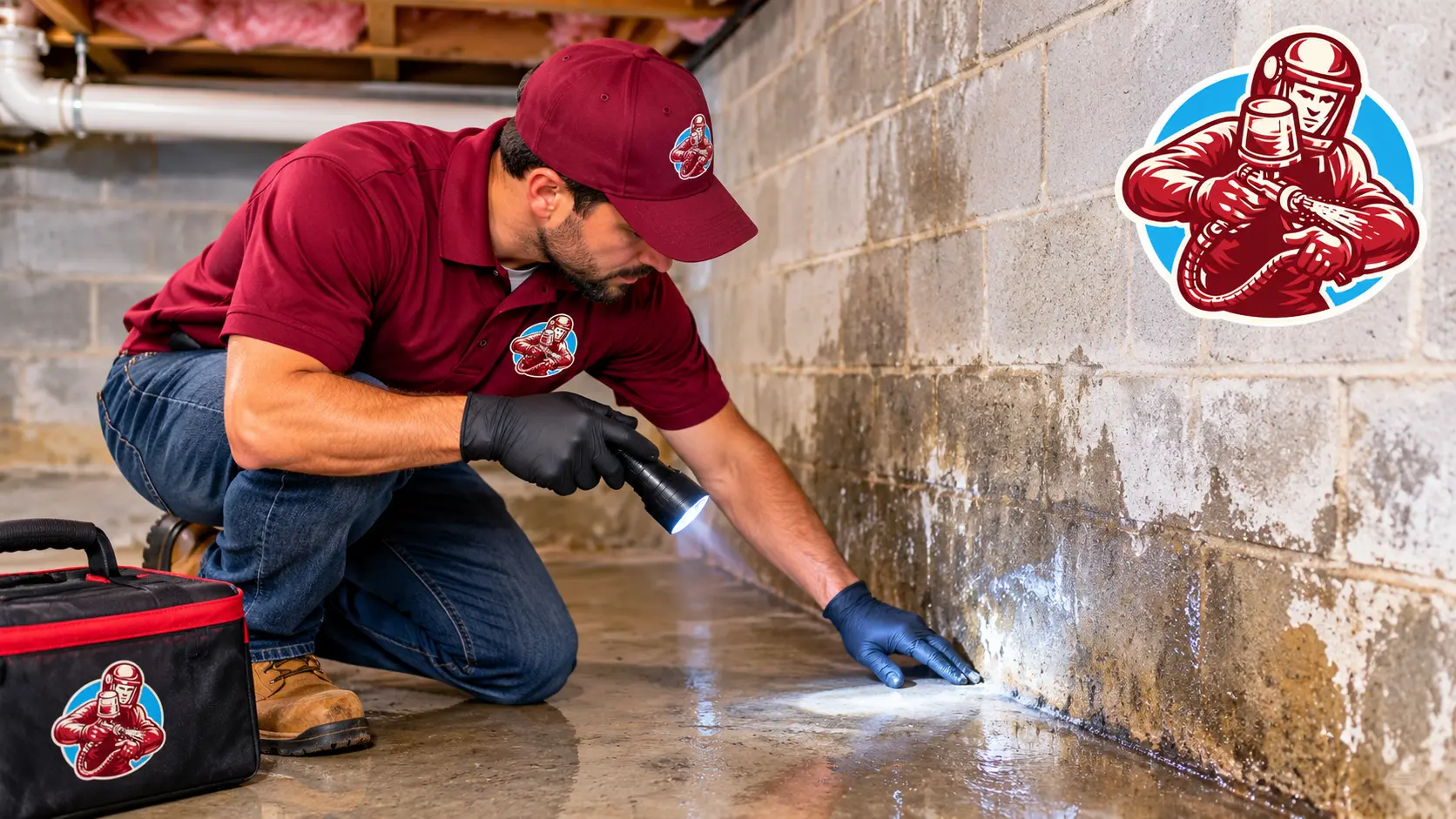
Most basement waterproofing projects cost $3,000 to $10,000, and a typical job runs around $5,000 . A small fix like sealing one crack can cost a few hundred dollars. A full system for a 1,000-square-foot basement averages about $13,640, . Those are national figures, and New Jersey’s labor costs tend to put local quotes at or above the middle of each range.
The method decides most of the price. That makes the useful question “which fix does my basement need?” rather than “what does waterproofing cost?” This guide prices each method, then shows how to match it to what you’re seeing.
Basement Waterproofing Cost by Method
| Method | What it does | Typical cost |
| Waterproof paint or sealant | Coats walls to reduce dampness | $1 – $8 per sq ft |
| Crack injection (epoxy or polyurethane) | Seals individual wall cracks | $250 – $1,000 per crack (Fixr); $800 – $1,500 (This Old House) |
| French drain | Moves surface and groundwater away from the house | $10 – $100 per linear foot |
| Interior perimeter drain | Trench along the inside walls catches water and sends it to a pump | $40 – $120 per linear foot |
| Sump pump | Pumps collected water out of the basement | $600 – $2,500 installed |
| Vapor barrier | Blocks moisture through walls or floor | $1,500 – $4,000 |
| Dehumidifier | Controls humidity after the water is managed | $1,000 – $2,800 installed |
| Exterior waterproofing | Excavates outside walls, then coats and seals them | Most expensive option; excavation alone is $50 – $200 per cubic yard (This Old House) |
To turn a per-linear-foot price into a budget, measure the walls that leak. A 30-by-40-foot basement has 140 feet of perimeter. At $40 to $120 per foot, an interior drain around the whole perimeter works out to roughly $5,600 to $16,800 before the pump. If only one 40-foot wall leaks, the drain may only need to cover that wall and part of the next.
Why Published Prices Disagree
The two leading national guides sit far apart: about $5,000 typical (Fixr) versus about $13,640 (This Old House). The difference is mostly scope. This Old House prices a full system for a whole 1,000-square-foot basement. Fixr’s range likely includes many smaller, single-method jobs. When you read any “average cost” figure, check what size and scope it assumes before comparing it with a quote.
Match the Problem to the Method
| What you see | Likely cause | Usual fix | Typical cost range |
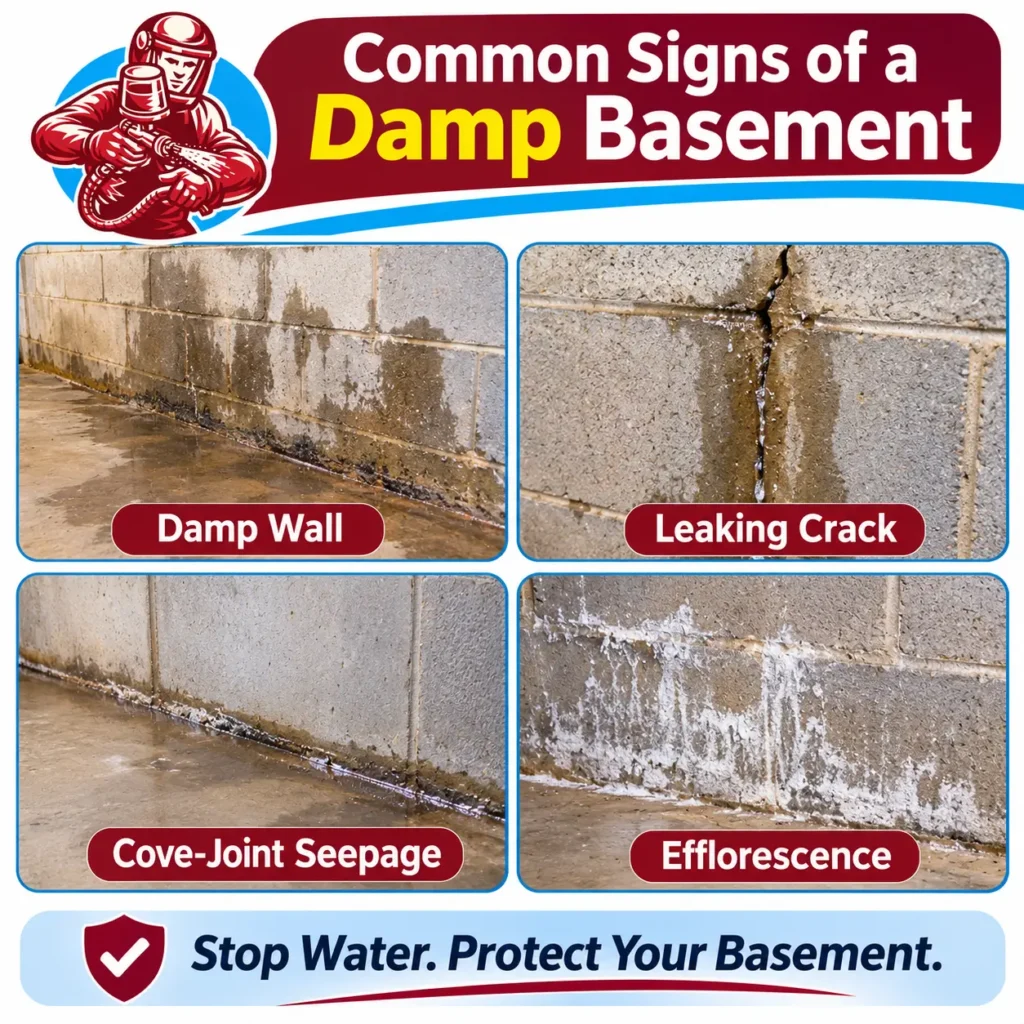
| Damp walls, musty smell, no standing water | Humidity and condensation | Dehumidifier; sealant on dry walls | $1,000 – $2,800 |
| Water coming through one visible crack | Crack in a poured concrete wall | Crack injection | $250 – $1,500 per crack |
| Water at the floor-wall joint after heavy rain | Hydrostatic pressure pushing water through the cove joint | Interior perimeter drain + sump pump | Per-foot drain cost + $600 – $2,500 pump |
| Water near one corner or under a downspout | Gutters or grading sending water at the foundation | Downspout extensions, regrading, or a French drain | $10 – $100 per linear foot for a French drain |
| Water through block walls in several places | Saturated soil against a block foundation | Interior drain system; exterior work in serious cases | Interior: per-foot drain cost; exterior: highest |
| White powder on walls | Efflorescence: minerals left by evaporating water | Find the moisture source first; this is a symptom, not mold | Depends on the source |
If a quote recommends a much bigger fix than your symptom calls for, ask the contractor to explain why. Sometimes the answer is sound, for example hidden saturation in block walls. Sometimes it’s an upsell.
Interior vs. Exterior Basement Waterproofing
| Interior water management | Exterior waterproofing | |
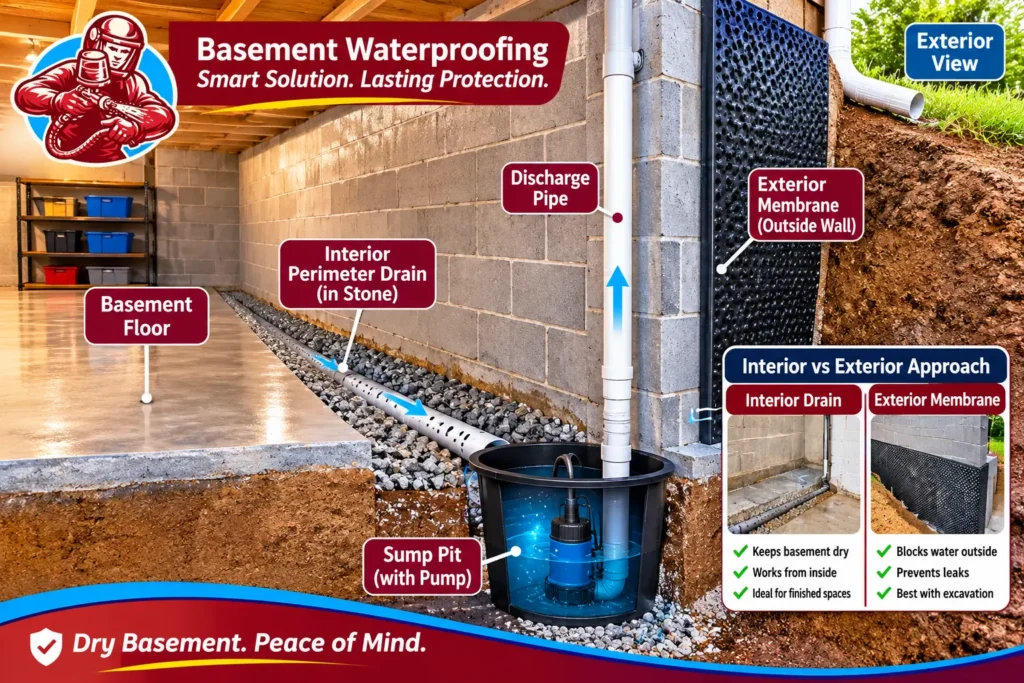
| How it works | A trench is cut around the inside perimeter, a pipe is laid in stone, and water drains to a pump | Outside walls are excavated, coated with tar or a membrane and sealed |
| Stops water | After it enters the wall, before it reaches the floor | At the outside face of the wall |
| Cost | Moderate: per-foot drain plus pump | Highest: excavation, membrane, backfill and landscape repair |
| Disruption | Inside the basement only | Yard, landscaping, sometimes driveways or walkways |
| Best for | Most leaking basements, especially cove-joint and floor seepage | Serious problems where water has to be stopped at the wall |
MMRG’s interior system follows that interior method. A trench is cut at a slight downward angle so water moves by gravity, a pipe is laid and covered with stone, cleanouts are added, and new concrete seals the floor. Exterior work is more expensive, and MMRG reserves it for serious problems.
What Drives the Cost Up in New Jersey
- Linear feet of leaking wall. Drain systems are priced per foot, so length matters most.
- Foundation type. Block foundations hold water in their cores and often need a full drain system. Poured concrete with a single crack may only need injection.
- Water table and soil. Low-lying, coastal and clay-heavy areas keep soil wet against the foundation longer, which raises hydrostatic pressure.
- Finished basements. Drywall, flooring and built-ins have to come out and go back in for interior drain work.
- Access. Decks, driveways and tight lot lines make exterior excavation slower and more expensive.
- Extras. A battery backup pump, dehumidifier, vapor barrier or mold cleanup adds to the total.
- Permits. Some NJ towns require permits for excavation or drainage changes.
Emergency Basement Waterproofing Service in NJ
If your basement is flooding now, the waterproofing system comes later. The first job is getting the water out and the space dry, because the EPA recommends drying wet materials within 24 to 48 hours to prevent mold.
- Stay safe. Don’t step into standing water if it may reach outlets, cords or appliances. Shut off power to the basement only if you can reach the panel safely. Keep generators outside and away from windows, because of carbon monoxide.
- Protect yourself. Wear an N-95 mask, gloves and goggles.
- Pump the water out. Point the discharge hose away from the house.
- Remove soaked materials. Wet carpet, padding, cardboard and drywall hold moisture and feed mold.
- Dry it out. Run fans and a dehumidifier, and open windows if the outside air is drier. Keep it running for 24 to 48 hours or longer.
- Document everything. Take photos before you remove or throw anything away, for insurance.
- Fix the cause. Once it’s dry, have the entry point inspected so the next storm doesn’t repeat it.
MMRG handles water extraction, flood cleanup and structural drying as well as waterproofing. One company can take a flooded basement from standing water to a permanent fix.
Can You Waterproof a Basement Yourself?
You can handle the outside basics: clean gutters, add downspout extensions and regrade soil so it slopes away from the house. Those are often the cheapest fixes and sometimes the only ones you need.
Inside, DIY coatings are where most people lose money. MMRG advises against products like Drylok and Flex Seal for basement walls. They may reduce surface dampness, but they don’t hold back water pushed through the wall by hydrostatic pressure. Epoxy seals well but is too expensive in the amounts needed to cover whole walls. Installing an interior drain means cutting and removing concrete, and one or two mistakes in slope or pump sizing can quickly raise the cost of the fix.
Does Insurance Cover Basement Water Damage?
Usually only part of it, and almost never the waterproofing itself. Standard homeowners policies generally exclude flood damage, so you need separate flood insurance, typically through the National Flood Insurance Program (NFIP). Even then, basement coverage is limited.
According to FEMA, NFIP building coverage in a basement includes items such as sump pumps, furnaces, water heaters, air conditioners, electrical boxes, foundation elements, stairways, unpainted drywall and insulation, and cleanup. Washers, dryers and freezers fall under contents coverage. It does not cover basement improvements: finished walls, paint, floors, carpeting, ceilings, furniture and personal belongings.
The practical takeaway: a finished basement in a flood-prone part of New Jersey carries more uninsured risk than most homeowners expect. That makes prevention easier to justify on cost.
How to Get an Accurate Price
The tables above tell you what’s normal. Only an inspection tells you which method your basement needs and how many feet of wall it covers. When you compare quotes, check that each one names the water entry point, the method, the linear footage and whether a pump, backup or dehumidifier is included. Most of the price difference between quotes sits in those details.
MMRG Mold Remediation & Basement Waterproofing is a licensed, insured New Jersey company that does waterproofing and mold remediation under one roof. If water has already caused mold, the same team handles both, with no second contractor. Inspections are led by Randy Cece, a Certified Mold Assessor (EAA) and Indoor Air Quality Technician (ESA) with documented training dating back to 2002. MMRG offers a free inspection and backs its pricing with a 10% price-match guarantee against other licensed NJ contractors.
Find out exactly what your basement needs before the next storm. Schedule a free inspection through our Basement Waterproofing Service page or call 908-601-1307.
FAQ
Is basement waterproofing worth it?
Usually, if water is getting in. Repeated water entry damages finishes, raises humidity and can lead to mold, and FEMA’s basement flood coverage excludes finished walls, floors and carpet. A properly matched fix often costs less than one round of uninsured damage to a finished basement.
What is the cheapest way to waterproof a basement?
Start outside. Cleaning gutters, extending downspouts and regrading soil away from the foundation cost far less than any interior system and fix many corner leaks. A single leaking crack in poured concrete is the next-cheapest fix, at a few hundred dollars for injection.
How long does basement waterproofing last?
It depends on the method. Drain systems and exterior membranes are built to last for decades when installed correctly. Sump pumps are mechanical and need periodic testing and eventual replacement. Surface paints and sealants wear the fastest. Ask any contractor what warranty covers the work and whether it transfers if you sell.
How long does installation take?
A crack injection can be done in a few hours. An interior perimeter drain and sump pump usually takes one to a few days, depending on basement size and whether finished walls have to come out. Exterior excavation takes longer and depends on weather and access.
Will waterproofing get rid of mold in my basement?
No. Waterproofing stops new water, but existing mold still has to be removed. If you already see or smell mold, plan for both. MMRG handles waterproofing and mold remediation, so one inspection can scope both jobs.