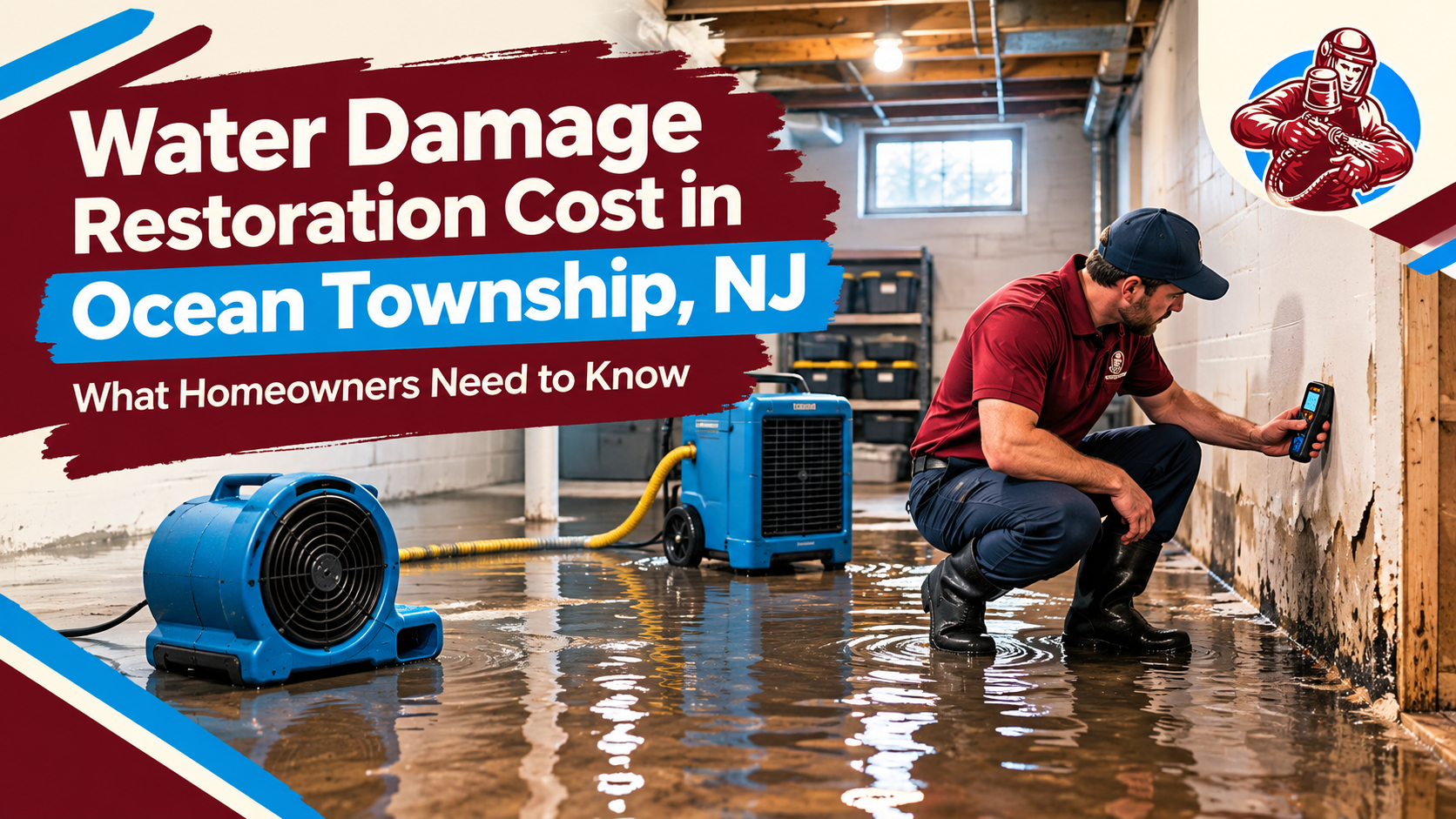
How Much Does Water Damage Restoration Cost in Ocean Township, NJ?

Water Damage Restoration Costs in Ocean Township

The average water damage restoration cost in Ocean Township, NJ typically ranges from $1,000 to $5,000, depending on the severity of the damage, the size of the affected area, the amount of water involved, and the restoration work required. For major flooding, extensive structural damage, or basement repairs, the total cost can exceed $10,000.

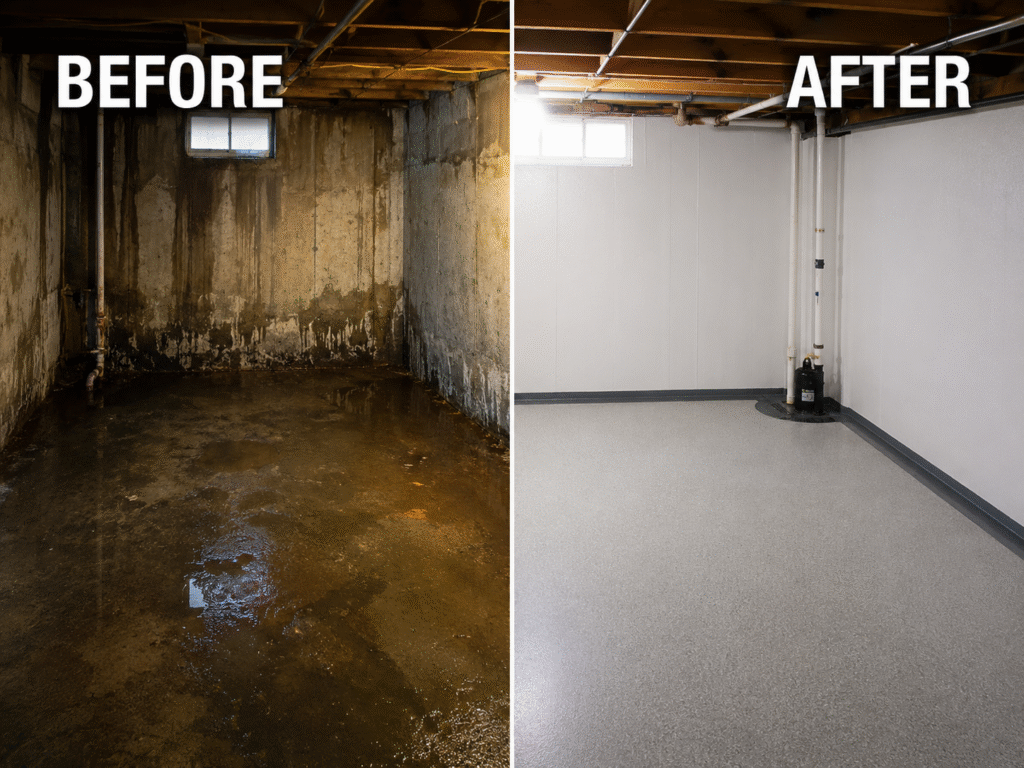
Water damage restoration costs vary because every situation is different. A small plumbing leak may only require water extraction and drying, while a flooded basement may require professional cleanup, moisture removal, mold prevention, damaged material replacement, and waterproofing solutions.

Common causes of water damage in Ocean Township homes include basement flooding, heavy storms, burst pipes, plumbing failures, appliance leaks, and foundation moisture problems. Addressing water damage quickly is important because trapped moisture can lead to mold growth, damaged building materials, unpleasant odors, and more expensive repairs.

MMRG Mold Remediation & Basement Waterproofing helps Ocean Township homeowners identify the source of water problems and choose the right restoration solution. With over 25 years of industry experience, certified professionals, and expertise in both water damage restoration and basement waterproofing, MMRG focuses on solving moisture problems instead of providing temporary fixes.

Average Water Damage Restoration Cost in Ocean Township, NJ

The cost of water damage restoration depends on several factors. While every project requires an individual assessment, homeowners often see pricing based on the severity of the damage.

Type of Water DamageTypical Cost Range
Minor water cleanupA few hundred dollars
Small room drying and cleanupHundreds to low thousands
Basement water damage restorationSeveral thousand dollars depending on damage
Major flooding with repairsSeveral thousand dollars or more

These are general industry ranges, not a fixed quote. The actual water damage restoration cost in Ocean Township, NJ depends on the amount of water, materials affected, drying time, and repair needs.

A professional inspection is the best way to understand the real scope of the problem before starting restoration work.

What Factors Affect Water Damage Restoration Cost?

Many homeowners assume the amount of visible water is the only factor that affects pricing. In reality, restoration professionals consider several details.

1. Source of the Water Damage

The cause of the water problem plays a major role in determining the restoration process.

Common causes include:

  • Basement flooding
  • Heavy rain and storms
  • Burst pipes
  • Plumbing leaks
  • Appliance failures
  • Sewer backups
  • Foundation water intrusion

Clean water from a broken supply pipe may require a different approach compared with contaminated water from a sewage backup.

2. Amount of Water and Affected Area

A small area with limited moisture can often be dried quickly.

However, larger problems may require:

  • Water extraction equipment
  • Industrial air movers
  • Commercial dehumidifiers
  • Moisture monitoring
  • Material removal
  • Structural repairs

For example, a flooded basement with soaked drywall, flooring, and insulation will usually cost more than removing water from a small utility room.

3. Basement Water Damage Repair Requirements

Many Ocean Township homes experience basement water problems because of heavy rainfall, drainage issues, groundwater pressure, or foundation leaks.

The basement water damage repair cost depends on whether the issue involves:

  • Water removal
  • Drying and dehumidification
  • Damaged drywall replacement
  • Flooring repair
  • Insulation removal
  • Mold prevention
  • Waterproofing improvements

If the same water problem keeps returning, simple cleanup may only provide a temporary solution. Addressing the moisture source is often the better long-term approach.

4. Mold Prevention After Water Damage

One important reason to handle water damage quickly is the risk of mold growth.

Moisture trapped inside walls, floors, or hidden spaces can create conditions where mold develops.

Professional restoration may include:

MMRG specializes in both water-related moisture issues and mold remediation. This combined expertise helps homeowners understand whether they only need drying or whether additional moisture solutions are required.

What Is Included in Professional Water Damage Restoration?

A professional restoration service usually follows a structured process.

Step 1: Water Damage Inspection

The first step is identifying:

  • Where the water came from
  • How far moisture has spread
  • Whether hidden areas are affected
  • What materials need attention

A proper inspection prevents homeowners from paying for unnecessary work.

Step 2: Water Removal and Extraction

Standing water must be removed quickly to reduce further damage.

Professionals may use:

  • Pumps
  • Extraction equipment
  • Specialized drying tools

Fast removal helps reduce damage to flooring, walls, furniture, and personal belongings.

Step 3: Drying and Moisture Control

Removing visible water is only part of the process.

Materials can still hold moisture after water extraction.

Restoration teams use:

  • Air movers
  • Dehumidifiers
  • Moisture meters

The goal is to make sure affected areas are properly dried.

Step 4: Repairs and Restoration

Depending on the damage, repairs may include:

  • Replacing damaged drywall
  • Repairing flooring
  • Restoring affected areas
  • Improving drainage
  • Installing waterproofing solutions

How Much Does Flood Cleanup Cost in Ocean Township, NJ?

The flood cleanup cost in Ocean Township, NJ depends on the severity of flooding and the type of cleanup required.

Factors that influence flood cleanup pricing include:

  • Depth of standing water
  • Basement size
  • Water contamination level
  • Amount of damaged materials
  • Drying equipment needed
  • Repair requirements

A basement with a few inches of clean water may require less work than a major flood involving contaminated water and structural damage.

Ocean Township homeowners should also consider the long-term cost of delaying cleanup. Water left untreated can increase the chance of mold growth and additional repairs.

Does Home Insurance Cover Water Damage Restoration?

Insurance coverage depends on the cause of the water damage and the details of the homeowner’s policy.

Many policies may cover sudden and accidental damage such as:

  • Burst pipes
  • Certain plumbing failures
  • Unexpected water leaks

However, insurance may not cover:

  • Long-term leaks
  • Poor maintenance
  • Flooding from outside sources
  • Groundwater issues

Homeowners should review their policy and speak with their insurance provider after water damage occurs.

Emergency Water Damage Restoration: When Should You Call?

Water damage should not be ignored because hidden moisture can continue causing problems even after the visible water disappears.

Call an Emergency water damage restoration Service when you notice:

  • Standing water inside your home
  • A flooded basement
  • Water coming through walls or floors
  • Sewage backup
  • Strong musty odors
  • Wet drywall or insulation
  • Water damage after storms

Quick action can reduce repair costs and help prevent secondary damage.

Why Choose MMRG for Water Damage Restoration in Ocean Township, NJ?

Many restoration companies focus only on removing water. MMRG takes a broader approach by looking at why the moisture problem happened and how to prevent it from returning.

MMRG Mold Remediation & Basement Waterproofing provides:

Certified Expertise

The team has more than 25 years of experience and certifications, including IAQ, ESA, and IICRC.

Honest Evaluations

MMRG does not focus on high-pressure sales. The company sends licensed microbiologists and environmental consultants instead of salespeople.

Water Damage and Mold Knowledge

Water problems and mold problems are often connected. MMRG understands how moisture creates conditions for mold growth.

Long-Term Solutions

Instead of only addressing visible damage, MMRG helps homeowners identify moisture sources and recommend permanent solutions.

For homeowners who need professional help after flooding or basement water problems, learn more about our Basement Waterproofing & Flood Cleanup NJ services.

Common Mistakes Homeowners Make After Water Damage

Waiting Too Long

Water damage often becomes worse over time. Delayed drying can increase repair needs.

Only Removing Visible Water

Drying the surface does not always remove hidden moisture.

Choosing Only Based on Price

The cheapest option may not solve the underlying moisture problem.

Ignoring the Cause

If the source of water intrusion is not fixed, the problem may return.

Frequently Asked Questions

How much does water damage restoration cost in Ocean Township, NJ?

The cost varies depending on the size of the affected area, water source, drying requirements, and repairs needed. A professional inspection is required for an accurate estimate.

How much does basement water damage repair cost?

The basement water damage repair cost depends on the amount of damage, materials affected, and whether waterproofing improvements are needed.

How quickly should water damage be cleaned up?

Water damage should be addressed as soon as possible. Fast action helps reduce structural damage and lowers the risk of mold growth.

Does water damage always cause mold?

Not every water event causes mold, but moisture that remains untreated can create favorable conditions for mold growth.

Can I clean up basement flooding myself?

Small water issues may sometimes be handled by homeowners. However, larger floods often require professional equipment to properly remove moisture and prevent hidden damage.

Why is basement waterproofing important after water damage?

Basement waterproofing helps address recurring moisture problems. It can reduce the chance of future leaks, flooding, and related damage.


Final Thoughts

The cost of water damage restoration in Ocean Township, NJ depends on many factors, including the severity of flooding, affected materials, drying requirements, and whether repairs or waterproofing are needed.

The most important step is not simply removing water. It is identifying the source of moisture and making sure the problem does not return.

MMRG Mold Remediation & Basement Waterproofing helps Ocean Township homeowners handle water damage with certified expertise, honest recommendations, and long-term moisture solutions.

If your home has experienced flooding, leaks, or basement water problems, professional evaluation can help protect your property before small issues become expensive repairs.
How Basement Waterproofing in Middletown, NJ Can Prevent Costly Water Damage

QUICK ANSWER: Basement waterproofing in Middletown is usually worth the money, but not for the reason most contractors give. The real argument is insurance. FEMA has 3,401 Middletown buildings inside the Special Flood Hazard Area, and a standard flood policy will not pay for your finished basement — not the flooring, not the finished walls, not your belongings stored down there. Waterproofing costs roughly $2,000 to $10,000 in New Jersey. A finished basement you have to rebuild out of pocket costs considerably more.

That is the whole case, and the rest of this article is the detail behind it: what is actually causing water in your particular part of Middletown, what your policy does and does not cover, what waterproofing fixes, and — just as important — what it will not fix.

There Are Three Different Middletowns, and They Get Wet for Three Different Reasons

Most waterproofing advice treats a township as one place. Middletown is not one place. It is roughly 41 square miles running from Sandy Hook Bay down to the Navesink River and inland, and a basement in Belford has almost nothing in common with a basement in Lincroft.

The Bayshore: Port Monmouth, Belford, Leonardo and North Middletown

During Superstorm Sandy, Middletown’s Sandy Hook Bay communities of Port Monmouth, Belford and Leonardo took storm surge flooding across a very large area generally north of Route 36. If you own a home here, your basement faces two separate threats that people frequently confuse: surge coming overland during a coastal event, and ordinary groundwater pressure the rest of the time.

They need different responses, and only one of them is a waterproofing problem. More on that further down, because it matters and nobody says it.

The Navesink Corridor: Navesink, Locust and the River Plaza Side

A substantial portion of Middletown sits within mapped storm surge hazard areas that extend well inland of the bay shore, including areas along the Navesink River and its tributaries. Homeowners along these creeks are frequently surprised to find themselves in a flood hazard area at all, because they are nowhere near the ocean.

Inland Middletown: Lincroft, New Monmouth, Nut Swamp and Middletown Village

Inland areas of the township contend with high water tables and clay-heavy soil that holds moisture long after a storm passes. This is the part most homeowners underestimate.

Clay does not drain. Sandy soil lets a downpour pass through and away within hours; clay holds it against your foundation for days. The practical effect is that an inland Middletown house can sit in saturated soil well after the sky clears, and every one of those days is a day groundwater is pushing against the slab and the wall. You do not need a flood to get a wet basement in Lincroft. You need three days of steady October rain.

EXPERT TIP: This is why a neighbour’s solution may not be yours. A sump pump alone can be adequate in fast-draining soil. In clay, without a drainage system feeding it, the pump is waiting for water that never reaches the pit while the water finds your cove joint instead.

What Costly Water Damage Actually Costs

The phrase gets used loosely, so here is what it means in practice. A basement that takes water repeatedly produces four separate expenses, and they compound.

1.  Contents. Anything porous stored down there — cardboard, furniture, rugs, seasonal storage, documents — is generally unsalvageable rather than cleanable.

2.  Finishes. Drywall wicks water upward from the bottom plate. Carpet padding holds it. Baseboard hides it. Once these are wet, they come out.

3.  Mold remediation. Mold can begin growing on damp materials within 24 to 48 hours. This is the expense most people do not budget for, and it is frequently larger than the drying.

4.  Structure. Repeated saturation and freeze-thaw cycling works on foundation cracks over years. This is the slowest and the most expensive.

Does Basement Waterproofing Prevent Mold?

QUICK ANSWER: Largely, yes. Mold requires moisture, and waterproofing removes the moisture source. It cannot prevent mold from a plumbing leak or from humid air with no ventilation, but for the specific case of groundwater seepage and repeated basement flooding, controlling the water is what stops the mold cycle. Cleaning mold without fixing the water simply resets the clock until the next wet season.

What Your Insurance Will and Will Not Pay For

This is the section we wish more Middletown homeowners read before a storm rather than after one.

Two policies are involved and they cover different events. Homeowners insurance generally covers sudden internal failures — a burst pipe, a failed water heater — and generally excludes surface water and flooding. Flood insurance through the NFIP covers flooding, but treats basements very restrictively.

How the NFIP Treats a Basement

The NFIP defines a basement as any area of a building with a floor below ground level on all sides. Note that sunken living rooms, crawl spaces and the lower levels of split-level homes may be treated as basements too — which catches out a lot of owners in this area.

In a basement, NFIP generally COVERSIn a basement, NFIP generally DOES NOT COVER
Unfinished drywall for walls and ceilingsFinished flooring — carpet, tile, hardwood
Footings, foundations, posts, piers and anchorageFinished walls and built-ins
Stairways and staircases attached to the buildingBathroom fixtures in the basement
Nonflammable insulationPersonal property stored below grade
Elevators and related equipmentFurniture, electronics, stored possessions
Equipment attached to a power source — electrical, HVAC, water heaters, pumps, washers, dryers, freezersEssentially anything that makes a basement a living space
EXPERT TIP: Read that right-hand column again if you have finished your basement. You can be inside a FEMA flood zone, carrying flood insurance, doing everything correctly — and still pay for the entire finished space yourself. That is the strongest financial argument for waterproofing in Middletown, and it has nothing to do with fear of mold.
SAFETY WARNING: Coverage details vary by policy and by carrier, and NFIP terms change. Read your own declarations page and speak to your agent before assuming anything. We are a waterproofing and remediation contractor, not an insurance adviser.

What Is Interior Basement Waterproofing?

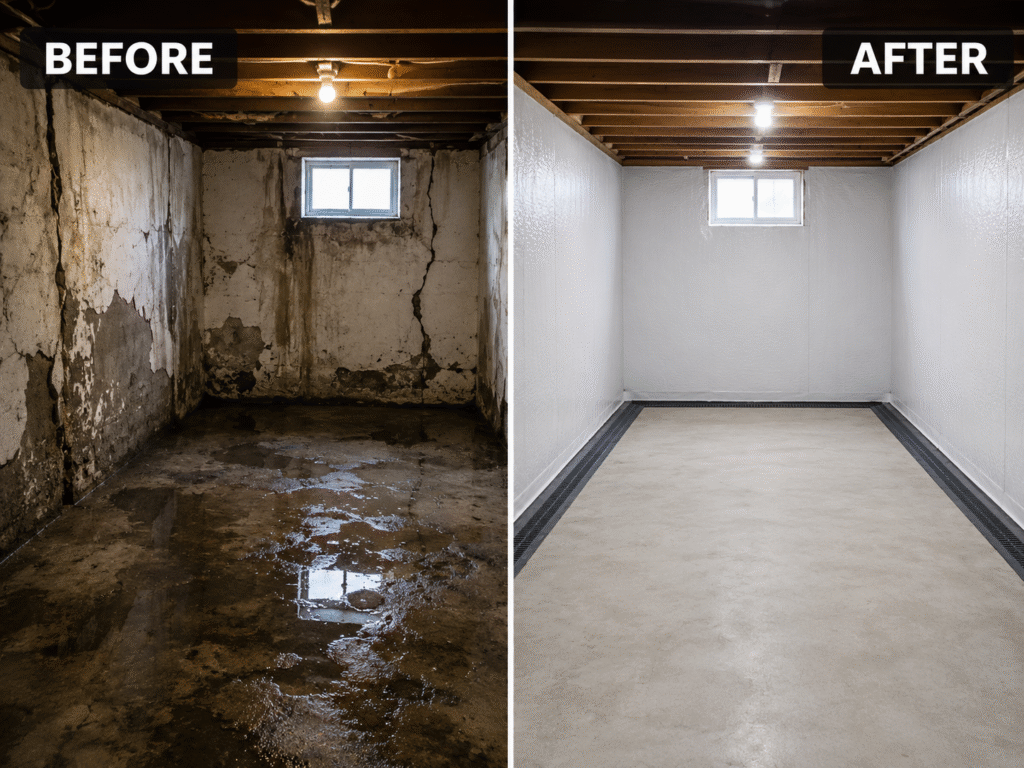
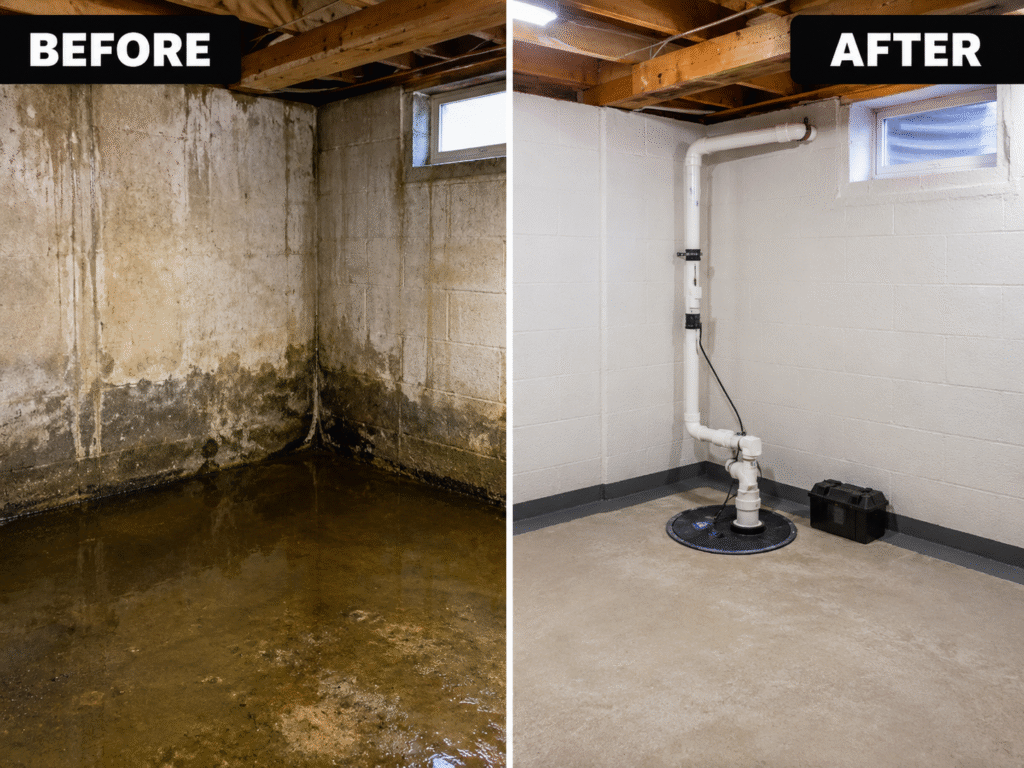
DEFINITION: Interior basement waterproofing is a drainage system installed inside the basement, at the base of the foundation wall, that intercepts groundwater before it reaches your floor and routes it to a sump pit where a pump discharges it away from the house. It manages water rather than trying to block it.

That distinction is the whole engineering argument. Waterproof paint and hydraulic cement try to hold water back with a coating. Interior drainage accepts that water is arriving and gives it a controlled path out.

Why Coatings Fail and Drainage Does Not

DEFINITION: Hydrostatic pressure is the force groundwater exerts on your foundation when saturated soil surrounds it. Water in soil pushes in every direction, including up through the slab and sideways against the wall, and it finds the weakest seam — almost always the cove joint where the floor meets the wall.

A coating is asked to resist that pressure across its entire surface indefinitely. It fails at one pinhole and the water is through. Drainage does not fight the pressure at all — it relieves it. That is why a properly installed interior system keeps working long after paint would have blistered off.

How the Installation Works

1.  A channel is cut in the slab along the perimeter, down to the footing.

2.  Perforated drainage pipe is laid in stone, sloped toward the sump location.

3.  A sump pit is set, with a correctly sized pump and a discharge line routed well away from the foundation.

4.  The channel is re-concreted, leaving a clean floor.

5.  A battery backup is added where the risk warrants it — and in a bayshore flood zone it usually does, because storms take the power and the pump out together.

6.  Most projects are completed within 2 to 5 days depending on size and complexity.

Interior vs Exterior Waterproofing: Which Does Your Middletown Home Need?

FactorInterior DrainageExterior Waterproofing
What it doesCollects groundwater inside and pumps it outExcavates to the footing and applies a membrane plus footing drain
Best forSeepage at the cove joint, water up through the slab, high water tableActive foundation cracks, failed original damp proofing, water entering through the wall above the slab
DisruptionInterior only — no excavation, landscaping untouchedSignificant — digging around the house, driveway and plantings affected
CostLowerSubstantially higher
Typical duration2–5 daysLonger, weather-dependent
When we recommend itMost inland Middletown groundwater problemsWhen there is structural work to do anyway, or when the wall itself is the entry point

There is a straightforward rule underneath that table. If water is arriving at the bottom — through the slab or at the cove joint — interior drainage is usually the right answer and the cheaper one. If water is coming through the wall itself, or the wall has cracks that need structural attention, exterior work earns its cost.

EXPERT TIP: Anyone who recommends exterior waterproofing before assessing where the water actually enters is guessing with your money. Ask them to show you the entry point.

How Do I Know If My Basement Needs Waterproofing?

Some of these are obvious. Several are not, and the subtle ones tend to appear first.

•  Water appears where the floor meets the wall after heavy rain — the classic hydrostatic pressure signature.

•  Water seeps up through cracks in the slab itself.

•  White chalky deposits on the block or concrete. That is efflorescence — mineral salts left behind as water passes through masonry and evaporates. It is proof water is moving through the wall, even when the surface looks dry today.

•  A musty smell that gets stronger after rain and fades in dry weather.

•  Paint blistering or peeling in a band near the floor.

•  Rust at the base of appliances, support posts or metal shelving.

•  The sump pump running frequently, or running for long stretches.

•  Floods every spring, or every autumn, on a predictable cycle.

A seasonal pattern is worth taking seriously rather than tolerating. Water that arrives on schedule is groundwater, and groundwater does not resolve itself.

How Much Does Basement Waterproofing in Middletown, NJ Cost?

QUICK ANSWER: Interior basement waterproofing in New Jersey typically runs between $2,000 and $10,000. The final price depends on the length of wall being drained, the condition of the foundation, whether a sump pump and pit are being added or replaced, whether a battery backup is included, and how accessible the perimeter is once storage and finished walls are accounted for.

Six factors move the number:

1.  Linear feet of perimeter drainage required — whether you are treating one wall or all four.

2.  Whether a sump pit needs to be created or an existing one can be reused.

3.  Pump capacity and whether battery or water-powered backup is included.

4.  Foundation condition, and whether cracks need structural repair before waterproofing.

5.  Access — a finished basement means removing and reinstating finishes.

6.  Whether exterior grading or downspout correction is part of the scope.

Is Basement Waterproofing Worth It? Run Your Own Numbers

Do not take a contractor’s word for this, including ours. Work it out for your own house:

1.  What would it cost to replace the finished space downstairs — flooring, drywall, trim, doors?

2.  What is stored down there that you could not replace easily?

3.  What does your flood policy actually exclude below grade? Check the declarations page.

4.  How many times has water come in during the last five years?

5.  Divide the waterproofing quote by the number of years you expect to stay in the house.

For an unfinished basement used for a washer, a dryer and some shelving, the maths sometimes says wait. For a finished basement in a flood zone with belongings your insurance will not replace, it usually does not.

We recently completed a basement waterproofing project for a homeowner in the Lincroft section of Middletown Township. The client was experiencing severe water intrusion, heavy dampness, and pooling water along the perimeter of their unfinished basement after every heavy rainfall.During our initial inspection, we discovered hydrostatic pressure was forcing ground water through the cove joint where the floor meets the foundation wall. To permanently resolve the issue, our team installed a full interior perimeter French drain system paired with a heavy-duty sump pump system equipped with a battery backup. The total cost for this complete remediation and installation was $8,500, fully restoring the basement to a dry, safe condition.

How Long Does Basement Waterproofing Last?

You will find conflicting claims on this, and it is worth being straight about why. Some sources say waterproofing lasts 25 to 30 years. Others say interior systems last 10 to 15 years while exterior waterproofing lasts the lifetime of the building. Both are being quoted about different things.

The drainage itself — the pipe, the stone, the channel — has no moving parts and can last decades. The sump pump does have moving parts, and residential pumps generally last seven to ten years. A battery has a shorter life still. So a system installed properly does not fail as a unit; the pump wears out first, and if nobody replaces it, the whole system is judged to have failed.

EXPERT TIP: Practical takeaway: budget for a pump replacement roughly every decade and test the one you have twice a year. Pour a bucket of water into the pit. The pump should start within seconds, clear it, and shut off cleanly. Two minutes, and it is the single highest-value maintenance task a homeowner can do in a Middletown basement.

What Basement Waterproofing Will Not Fix

We would rather you hear this from us than discover it during a storm.

An interior drainage system manages groundwater — water arriving through the soil, under pressure, at a rate a pump can handle. It is not designed for and cannot stop overland flooding or storm surge. If bay water comes across Route 36 and enters your house at grade, no sump pump in a residential basement is going to out-pump the Raritan Bay. That is a flood event, and the answers to it are elevation, flood openings, flood insurance and a township floodplain conversation, not a drainage system.

This matters specifically for Port Monmouth, Belford, Leonardo and North Middletown, where both problems exist in the same house. Waterproofing is the right investment for the 360 days a year of groundwater. It is not the answer to the one day of surge, and anyone selling it to you as surge protection is misleading you.

Waterproofing also will not fix a plumbing leak, condensation caused by unventilated humidity, or a roof problem sending water down the outside of the wall. A proper inspection identifies which of those you actually have before anyone quotes a drainage system.

Do These Before You Spend Anything

A meaningful number of wet Middletown basements improve substantially from work that costs almost nothing. Try these first:

1.  Clean the gutters properly and confirm every downspout discharges at least four feet from the foundation — not straight down beside it. This one change fixes more basements than any other free action.

2.  Walk the perimeter and check the grading. The ground should fall away from the house. After decades of settling it frequently does not, and a few hours of soil is cheaper than a drainage system.

3.  Clear window wells of leaves and debris and check the covers.

4.  Test the sump pump with a bucket of water, and confirm the discharge line outside is not crushed, clogged or frozen.

5.  Run a dehumidifier for two weeks and see whether the smell improves. If it does, you may have a humidity problem rather than a water intrusion problem — a much cheaper fix.

If you have done all five and water still arrives, it is groundwater and you have your answer.

When to Call a Professional in Middletown

Get It Assessed Now If

•  Water enters on a predictable seasonal cycle.

•  Water is coming up through the slab rather than in through a window or door.

•  There is a horizontal crack, stair-step cracking in block, or any crack wider than about an eighth of an inch.

•  The basement is finished and has taken water even once.

•  You are buying or selling and need to know the exposure.

•  There is visible mold or a persistent musty smell.

You Can Plan Rather Than Panic If

•  The basement is unfinished and takes minor seepage in extreme rain only.

•  There are no cracks of concern.

•  Nothing valuable is stored below grade.

•  Then get the inspection, understand the scope, and schedule for a month that suits your budget.

Verify Any Contractor Before You Sign

New Jersey does not license mold assessors or remediators at state level, and waterproofing is a home improvement trade rather than a separately licensed one. Since there is no specialist state licence to check, verify these instead:

1.  New Jersey Home Improvement Contractor registration — required, and verifiable free through the NJ Division of Consumer Affairs. Ask for the number and look it up.

2.  General liability insurance, and workers’ compensation if a crew is coming to your property.

3.  A written scope that states where the water is entering, not just what is being installed.

4.  A clear warranty in writing — what it covers, for how long, and whether it transfers if you sell.

5.  References from work in Middletown, ideally in your section of the township.

Why Middletown Homeowners Choose MMRG

•  We find where the water enters before we quote a system. No price is given for a basement nobody has inspected.

•  We recommend interior drainage when interior drainage is the answer, and we say so when exterior work or simple grading correction would serve you better.

•  We handle both the waterproofing and the mold side, so you are not coordinating two contractors who blame each other. Water problems and mold problems are the same problem at different stages.

•  We will tell you when the free steps above are likely to solve it, even though that means no job for us.

•  Free on-site inspection with moisture readings and photographs you keep.

•  New Jersey-registered Home Improvement Contractor, HIC #13VH07910200, fully insured. Based in Ocean Township, serving Middletown and Monmouth County.

MMRG specializes in mold remediation and also provides basement waterproofing services to all of New Jersey. We are fully licensed, insured, ESA, and IAQ certified. 

Book a Free Basement Inspection in Middletown

If your basement takes water on a schedule, smells musty after rain, or you simply want to know what your exposure is before the next coastal storm, the inspection costs nothing. You get moisture readings, an identification of where water is entering, photographs you keep, and a written scope.

If the fix is regrading and a gutter extension, we will tell you that and leave.

Learn more about our interior basement waterproofing service →

Or call 908-601-1307 to book. We cover Middletown, including Belford, Leonardo, Port Monmouth, Navesink, Lincroft, River Plaza, and New Monmouth.

Best Basement Waterproofing Solutions in Rumson, NJ to Protect Your Home

The best basement waterproofing solutions for Rumson, NJ homes include interior French drain systems, exterior waterproofing membranes, sump pump installation, crawl space encapsulation, and foundation crack repair. Because Rumson sits between the Navesink and Shrewsbury Rivers in one of Monmouth County’s most flood-prone corridors, water intrusion is not a rare occurrence — it is a predictable risk that every homeowner in this area needs to plan for. MMRG Mold Remediation & Basement Waterproofing provides free inspections, emergency response, and proven waterproofing solutions for Rumson homeowners and families throughout surrounding NJ communities.

Emergency basement waterproofing services​

Why Rumson, NJ Homes Are Especially Vulnerable to Basement Water Damage

Rumson is a beautiful borough — wide lots, mature trees, riverfront estates, and some of the most sought-after real estate in Monmouth County. But beneath that curb appeal, many Rumson homes carry a hidden liability: aging foundations that were never designed to handle the water pressure they face today.

Here’s what makes Rumson particularly challenging:

  • River proximity. Rumson is bordered on three sides by the Navesink River, Shrewsbury River, and Sandy Hook Bay. During heavy storms or high tides, the water table in low-lying areas of the borough can rise rapidly — pushing groundwater directly into foundation walls and floor slabs.
  • Aging housing stock. Many Rumson homes were built in the early to mid-1900s. Stone rubble foundations and old mortar joints are no match for modern stormwater volumes.
  • Post-Sandy legacy. Hurricane Sandy caused catastrophic flooding across coastal Monmouth County. Even homes that were “repaired” after Sandy often have residual moisture damage, compromised waterproofing membranes, and elevated mold risk that has never been fully addressed.
  • Freeze-thaw cycles. New Jersey winters push water into micro-cracks in concrete and masonry foundations. By spring, those cracks are noticeably larger — and actively leaking.

If you’ve noticed damp walls, a musty smell, white chalky deposits on your basement walls (called efflorescence), or water pooling near your sump pit, these are not cosmetic issues. They are early warnings of a structural problem that will only get more expensive the longer it goes unaddressed.

The 6 Best Basement Waterproofing Solutions for Rumson Homes

1. Interior French Drain Systems

An interior French drain — also called an interior perimeter drainage system — is the most widely used and cost-effective basement waterproofing solution for existing homes in Rumson and across Monmouth County.

How it works: A shallow channel is cut around the perimeter of your basement floor. A perforated pipe is laid in the channel, surrounded by gravel, and connected to a sump pit. Water that seeps through the walls or up through the floor is intercepted and redirected to the sump pump before it can flood your basement.

Best for: Homes with chronic seepage through walls or floor joints, finished basements that have flooded more than once, older homes where exterior excavation is not practical.

What to expect: Installation typically takes one to two days and does not require excavating outside the home. It is one of the least disruptive waterproofing methods available.

2. Exterior Waterproofing Membranes

Exterior waterproofing goes to the source of the problem — the outside of your foundation wall — before water ever gets a chance to enter.

How it works: The soil around the foundation is excavated to the footing. A waterproofing membrane (typically a rubberized asphalt or polymer-modified compound) is applied directly to the exterior wall. A drainage board and gravel backfill are added to direct water away from the foundation and down to a perimeter drain at the footing.

Best for: New construction, severe foundation leaks, homes near water where hydrostatic pressure is consistently high, or situations where interior drainage alone has not solved the problem.

Cost consideration: This is the most comprehensive solution but also the highest investment. In Rumson, where property values are high and foundations are often close to river-level grade, the long-term protection justifies the cost.

3. Sump Pump Installation and Replacement

No basement waterproofing system is complete without a functioning sump pump. In Rumson and neighboring Oceanport and Little Silver, power outages during Nor’easters are common — and a sump pump without a battery backup is a liability waiting to happen.

Primary sump pump handles normal groundwater discharge. Battery backup sump pump keeps working when the power goes out — which is exactly when you need it most. Wi-Fi-enabled sump pumps send alerts to your phone if the pump fails or water levels rise.

⚠️ Warning: One of the most common mistakes we see from Rumson homeowners is delaying sump pump replacement because “it still works.” Sump pumps have a lifespan of 7–10 years. If yours is older than that and you haven’t had it inspected, you are one bad storm away from a basement full of water.

4. Crawl Space Encapsulation and Repair

Many homes in Rumson, Colts Neck, and Holmdel have crawl spaces rather than full basements — and an unencapsulated crawl space is one of the biggest sources of moisture, mold, and air quality problems in New Jersey homes.

How it works: A heavy-duty polyethylene vapor barrier is installed over the crawl space floor and up the walls. Vents are sealed, a dehumidifier is installed, and any existing mold or rot is remediated before encapsulation is completed.

Why it matters: Up to 50% of the air in your living space comes from below your home. An open, damp crawl space pumps mold spores and humid air directly into your family’s breathing space every single day.

Crawl space repair also addresses damaged joists, pier supports, and vapor barriers that have failed over time — especially common in post-Sandy Rumson homes.

5. Basement Foundation Repair

Waterproofing without addressing structural cracks is like painting over rust — the problem underneath keeps getting worse.

Epoxy injection is used for narrow, non-structural cracks in poured concrete foundations. The epoxy bonds the crack permanently and restores the wall’s original strength.

Carbon fiber straps are used for bowing or bulging concrete block walls. They halt inward movement and prevent the wall from failing without requiring full excavation.

Wall anchors are used for more severely displaced walls, where the foundation needs to be gradually straightened over time.

💡 Expert Advice: Never ignore a crack wider than ¼ inch, or any crack that is actively leaking water or growing in length. These are signs of hydrostatic pressure or soil movement that will not resolve on their own.

6. Window Well Covers and Exterior Grading

These are the most affordable and often most overlooked fixes in a basement waterproofing plan.

  • Window well covers prevent rainwater from pooling directly against below-grade basement windows — a common entry point for water in Rumson’s storm-heavy months.
  • Grading corrections ensure soil slopes away from your foundation at the correct angle (at least 6 inches of drop over 10 feet). Flat or inward-sloping grades funnel millions of gallons of rainwater directly into your foundation over the years.
24-hour basement waterproofing services​

Emergency Basement Waterproofing Services in Rumson, NJ

Some water problems cannot wait for a scheduled appointment. If your basement is actively flooding — during a storm, after a pipe burst, or following a sump pump failure — you need emergency basement waterproofing services right now.

Signs you need emergency response:

  • Standing water on the basement floor (any amount)
  • Water touching your electrical panel, HVAC system, or water heater
  • A sewage backup combining with groundwater flooding
  • A foundation wall that appears to be bowing inward or cracking during rain

MMRG’s 24-Hour Emergency Basement Waterproofing Response includes:

  1. Immediate dispatch to your Rumson, NJ address — day or night
  2. Industrial water extraction and 24/7 water extraction services
  3. Structural drying with commercial-grade air movers and dehumidifiers
  4. Emergency mold prevention treatment on all wet surfaces
  5. Written documentation for your homeowner’s insurance claim
  6. Follow-up waterproofing solution recommendation after the emergency is stabilized

⚠️ Critical Safety Warning: Do not enter a flooded basement if water has reached electrical outlets, the electrical panel, or any appliances. Shut off power at the main breaker first, or wait for a professional. Standing water and live electricity is a life-threatening combination.

Basement Waterproofing and Mold Remediation — Two Problems, One Solution

Here is something many Rumson homeowners do not realize until it is too late: water intrusion and mold growth are inseparable problems. You cannot effectively solve one without addressing the other.

Mold can begin colonizing wet drywall, wood framing, and insulation within 24 to 48 hours of a water event. In the warm, humid basement environment common in Monmouth County summers, that timeline can be even shorter.

The most common mold species found in NJ basements include:

  • Cladosporium — grows on wood and drywall, triggers allergies
  • Aspergillus — common in water-damaged insulation and HVAC systems
  • Stachybotrys chartarum (Black Mold) — associated with long-term moisture exposure, serious health risks

MMRG’s combined approach:

  1. Waterproofing first — eliminate the moisture source permanently
  2. Mold remediation second — remove existing contamination safely and completely
  3. Air quality testing — confirm the space is clean before the job is closed
  4. Prevention guidance — dehumidifier sizing, ventilation recommendations, and maintenance schedule

If you are only treating the mold without fixing the water problem, you are wasting money. The mold will come back within weeks.

Basement Waterproofing Company

How Much Does Basement Waterproofing Cost in Rumson, NJ?

Cost is one of the first questions homeowners ask, and the honest answer is: it depends. Here are realistic ranges for the Rumson and Monmouth County market:

SolutionEstimated Cost Range
Sump Pump Installation$800 – $2,500
Interior French Drain System$3,000 – $8,000
Crawl Space Encapsulation$2,000 – $7,000
Foundation Crack Repair (Epoxy)$500 – $3,500
Carbon Fiber Wall Straps$1,500 – $5,000
Exterior Waterproofing$8,000 – $20,000+
Full Basement Waterproofing Package$10,000 – $30,000+
Emergency Water Extraction$1,500 – $5,000+ depending on severity

Factors that affect your cost:

  • Size and depth of your foundation
  • Age of the home and existing foundation condition
  • How close your home sits to the Navesink or Shrewsbury River
  • Interior vs. exterior approach required
  • Whether mold remediation is also needed

💡 Money-Saving Tip: MMRG offers free, no-obligation basement inspections for all Rumson and Monmouth County homeowners. Before you agree to any scope of work, get a written assessment from a licensed professional so you understand exactly what you need — and what you don’t.

Basement Waterproofing Prevention and Maintenance Tips for Rumson Homeowners

The best waterproofing system in the world still requires basic maintenance to perform at its best. Here is a seasonal checklist every Rumson homeowner should follow:

Spring (Pre-Storm Season):

  • ✅ Test your sump pump by pouring water into the pit — confirm it activates and discharges properly
  • ✅ Inspect the basement walls for new cracks or efflorescence that developed over winter
  • ✅ Clear window wells of leaves and debris accumulated over fall and winter
  • ✅ Confirm downspout extensions are intact and directing water away from the foundation

Summer:

  • ✅ Run a dehumidifier in the basement — target 50% relative humidity or below
  • ✅ Inspect crawl spaces for signs of moisture, mold, or pest intrusion
  • ✅ Check that sump pump discharge line is not clogged or frozen at the exit point

Fall:

  • ✅ Clean gutters thoroughly before the November rain and storm season
  • ✅ Confirm all exterior grading still slopes away from the foundation
  • ✅ Test battery backup sump pump before winter storms arrive

Winter:

  • ✅ Insulate exposed pipes near foundation walls to prevent freeze-bursts
  • ✅ Watch for ice dam formation on rooflines — melting ice can seep into basement walls through attic and wall cavities
  • ✅ Schedule a professional moisture inspection if you haven’t had one in the past year

When Should Rumson, NJ Homeowners Call a Professional?

Many homeowners wait too long. The general rule is simple: if water has entered your basement more than once, it will enter again. Do not treat recurring basement seepage as a normal inconvenience. It is not.

Call MMRG immediately if you notice any of the following:

  • Water entering the basement during or after every significant rainstorm
  • Any crack in a foundation wall wider than ¼ inch
  • Your sump pump is running constantly or not activating at all
  • A persistent musty smell — even without visible water
  • Bowing, bulging, or leaning basement walls (this is a structural emergency)
  • White efflorescence deposits spreading across walls
  • You just purchased an older Rumson home and have no history of the foundation’s condition
  • Any water event that touches insulation, drywall, wood framing, or stored belongings

Serving Rumson and Surrounding Communities Across Monmouth County, NJ

MMRG proudly serves homeowners throughout Rumson and the broader Monmouth County region. Our team understands that each community in this area faces its own unique water and mold challenges:

Holmdel, NJ — Older colonial homes on clay-heavy hillside lots where drainage is poor and foundation settlement is common. Crawl space repair and interior drainage are frequent needs here.

Colts Neck, NJ — Large estate properties with expansive basements and crawl spaces, often with aging sump systems that have never been updated since the homes were built.

Little Silver, NJ — A coastal community where salt-air humidity, aging sewer infrastructure, and proximity to tidal waterways make mold remediation and basement waterproofing ongoing priorities.

Middletown, NJ — One of the largest and most densely populated municipalities in Monmouth County, with a wide range of housing ages and recurring storm flooding in low-lying subdivisions.

Tinton Falls, NJ — Mixed soil composition in this area causes uneven foundation settlement, and many homes have sump systems that are undersized for the actual groundwater volume they face.

Eatontown, NJ — Residential flooding near the Route 35 commercial corridor is a recurring issue after heavy rain events. We provide both emergency water cleanup and long-term waterproofing in this area.

Long Branch, NJ — Beachfront and near-shore properties in Long Branch deal with chronic salt-air humidity, high water tables, and storm surge risk — a demanding combination for any basement.

Monmouth Beach, NJ — Direct oceanfront exposure creates extreme moisture conditions. Waterproofing systems here require robust solutions and regular maintenance.

Why Choose MMRG for Basement Waterproofing and Foundation Repair in Rumson, NJ?

There is no shortage of contractors who will take your money for a waterproofing job. Here is what makes MMRG different:

✅ Fully Licensed, Insured & Accredited MMRG holds accreditation with over a dozen professional organizations in the water damage restoration and mold remediation industry. We are fully licensed as a New Jersey Home Improvement Contractor and carry comprehensive liability and workers’ compensation insurance.

✅ Free Basement Inspections for All NJ Homeowners We never charge for an inspection. Every homeowner in Rumson and Monmouth County deserves an honest, professional assessment before committing to any waterproofing work.

✅ Combined Waterproofing + Mold Remediation Under One Roof You won’t need to hire two separate contractors. MMRG handles the water problem and the mold problem together — saving you time, coordination headaches, and money.

✅ 24/7 Emergency Response Water damage doesn’t follow business hours. Our team is available around the clock for emergency water extraction, active flooding response, and urgent foundation stabilization across Rumson and all of Monmouth County.

✅ Transparent, Written Estimates We provide detailed written scopes of work before any project begins. No surprise charges. No upselling tactics. Just honest work at fair prices.

✅ References Available on Request We have served New Jersey homeowners for years and have a track record of satisfied clients across Rumson, Holmdel, Colts Neck, Middletown, and beyond. Ask us for references — we’re proud to provide them.

✅ Insurance Claim Support Dealing with a water damage insurance claim is stressful enough. MMRG provides complete documentation — photos, moisture readings, written reports — to support your claim from day one.

Get Your Free Basement Waterproofing Inspection in Rumson, NJ Today

You don’t have to wait for the next big storm to find out whether your basement is truly protected. If you live in Rumson or anywhere in Monmouth County and you have questions about your foundation, basement moisture, crawl space, or existing waterproofing system — MMRG is ready to help.

Our free inspection includes:

  • A full visual assessment of your basement, crawl space, and foundation exterior
  • Moisture meter readings on all suspect walls and floors
  • Identification of active or historical water entry points
  • A clear, written explanation of what we found and what we recommend
  • A no-obligation estimate if work is needed

There is no catch. No pressure. Just honest answers from local experts who know Rumson homes.

📞 Call Now: +1 908-601-1307 🌐 Visit Our Basement Waterproofing Service Page: mymoldremovalguys.com/services/basement-waterproofing-flood-cleanup-in-nj 📍 Serving Rumson, NJ and all of Monmouth County — Ocean Township, NJ 07712

Frequently Asked Questions About Basement Waterproofing in Rumson, NJ

Q1: What is the most effective basement waterproofing method for homes in Rumson, NJ? 

For most Rumson homes, an interior French drain system combined with a battery-backup sump pump is the most effective, least disruptive, and most cost-efficient long-term solution — though homes with severe hydrostatic pressure near the Navesink River may also need exterior waterproofing.

Q2: How much does basement waterproofing cost in Rumson, NJ? 

Basement waterproofing in Rumson typically ranges from $3,000 for an interior drainage system to $20,000 or more for full exterior waterproofing with foundation repair — MMRG offers free inspections so you know your exact cost before committing to anything.

Q3: Can basement waterproofing also prevent mold growth in my Rumson home?

Yes — waterproofing eliminates the moisture source that feeds mold, but any existing mold must be professionally remediated before or alongside the waterproofing to ensure a fully clean result.

Q4: How quickly can MMRG respond to a basement flooding emergency in Rumson, NJ? 

MMRG provides 24/7 emergency response across Rumson and Monmouth County, with same-day water extraction available for active flooding situations — call +1 908-601-1307 any time.

Q5: Does my homeowner’s insurance cover basement waterproofing in New Jersey? 

Standard homeowner’s insurance typically covers sudden water damage (like a burst pipe) but not gradual seepage or flooding — MMRG provides full documentation to support insurance claims where coverage applies.

Q6: How long does a basement waterproofing system last in a New Jersey home? 

A professionally installed interior drainage system with a quality sump pump typically lasts 20–30 years with proper maintenance, while exterior waterproofing membranes can last the lifetime of the home.

Q7: Should I waterproof my basement before selling my home in Rumson, NJ? 

Yes — NJ sellers are required to disclose known water intrusion history, and Rumson buyers’ inspectors routinely flag wet or unprotected basements, which can reduce offers or kill deals entirely; a waterproofed basement protects your sale price and closing timeline.

How Basement Waterproofing in Middletown, NJ Can Prevent Costly Water Damage

basement waterproofing

If your basement takes on water in Middletown, the smartest fix is not to keep cleaning it up. It is to stop the water pathway, control moisture, and protect the foundation before the next storm turns a small seepage issue into flooring damage, mold growth, or structural repairs. In Middletown, that matters even more because the township has thousands of buildings in the Special Flood Hazard Area and local guidance specifically warns about both tidal and rainfall-induced flooding.

For many homeowners, basement waterproofing in Middletown, NJ is not just about keeping the basement dry. It is about protecting drywall, furniture, electrical systems, storage, indoor air quality, and the long-term value of the home. MMRG’s own service pages frame waterproofing as a long-term solution for flooding, mold prevention, and foundation moisture problems, not a cosmetic patch.

What basement waterproofing actually means

Basement waterproofing is the process of controlling or stopping water intrusion through the basement walls, floors, footing area, and surrounding foundation. Depending on the source of the problem, that can include interior drainage, sealants, moisture barriers, sump pump installation, exterior foundation waterproofing, structural drying after a flood, or crawl space moisture control when the lower level and crawl space are connected. MMRG’s current site architecture reflects exactly that kind of full-system approach, with separate pages for interior waterproofing, exterior foundation waterproofing, sump pumps, emergency water extraction, structural drying, crawl space encapsulation, and vapor barriers.

A lot of homeowners search for terms like basement waterproofing near me, waterproofing inside basement, or permanent basement waterproofing because they want a straight answer. The straight answer is this: permanent results usually come from matching the solution to the source of the water, not from applying one product everywhere. EPA and CDC guidance both center moisture control as the real key to preventing mold and repeat damage.

Why Middletown basements are especially vulnerable to water damage

Middletown’s official floodplain information makes this clear. The township says it has 3,401 buildings and 4,623 acres in the Special Flood Hazard Area. It also explains that local flooding can come from two different directions: coastal or tidal flooding, and rainfall-induced flooding. That is exactly why a wet basement in Middletown is often more than a one-time inconvenience.

The township also notes that its more densely populated neighborhoods overlap with the Special Flood Hazard Area and higher levels of impervious cover. In plain English, that means water has fewer places to soak into the ground and more chances to pond near foundations, driveways, and lower-level entry points. Middletown specifically recommends maintaining gutters and downspouts, improving lot grading, sealing foundation cracks, and protecting utilities above flood levels.

That local flood picture has become more important, not less. Middletown’s floodplain office says the NJDEP REAL Rule, adopted on January 20, 2026, created a new climate-adjusted flood layer, and the Tidal Climate Adjusted Flood Elevation can add 4 feet of required elevation to structures and utility mechanicals in affected areas. The township also warns that some homes outside the current FEMA flood zone may still fall inside that newer climate-adjusted zone.

How basement waterproofing helps prevent costly water damage

1. It stops repeat seepage before it ruins finishes and storage

A basement that only gets “a little wet” is still at risk. Repeated moisture can damage drywall, baseboards, carpet, laminate, wood storage shelves, and anything sitting directly on the slab. MMRG’s basement waterproofing page points out the practical reality: you cannot safely finish or furnish a basement that regularly takes on water.

2. It helps prevent mold growth

CDC says mold grows where there is moisture, including after flooding, and EPA says wet or damp materials should be dried within 24 to 48 hours or mold may develop. That is one of the biggest reasons waterproofing matters. A water problem that keeps returning becomes a mold problem sooner than many homeowners expect.

3. It protects the foundation and the structure above it

When water presses against foundation walls or moves through cracks and slab joints, it does not just create puddles. It can gradually damage framing, finishes, subfloors, and foundation materials. MMRG’s waterproofing and exterior foundation pages both position basement and foundation moisture control as part of long-term structural protection.

4. It lowers the chance of emergency cleanup costs later

Standing water often leads to extraction, drying, and dehumidification work on top of the original leak problem. MMRG’s emergency water extraction and structural drying pages both frame fast removal and drying as essential to minimizing restoration costs and preventing mold after flooding.

Most interior basement waterproofing projects in Middletown start with water control

Most interior basement waterproofing projects in Middletown are not solved with paint alone. They begin with identifying where water is entering and then using interior drainage, sealants, moisture barriers, and often a sump pump to manage seepage that is already reaching the basement. That is consistent with MMRG’s interior waterproofing page, which lists drainage installation, moisture barriers, crack sealing, basement floor and wall waterproofing, and sump pump solutions as core elements of interior waterproofing work.

That matters because many homeowners still search for basement waterproofing paint, waterproof paint for basement walls, or how to waterproof basement walls from inside. A coating can have a role in a broader system, but a coating by itself does not relieve outside water pressure, redirect runoff, improve grading, or remove water that is already collecting below the slab. EPA and Middletown both emphasize moisture control and redirecting water away from the house, which is why professional waterproofing systems usually outperform cosmetic-only fixes.

Interior vs. exterior basement waterproofing

Interior basement waterproofing

Interior waterproofing is usually the better fit when the main problem is seepage through wall-floor joints, damp basement walls, recurring puddles after storms, or moisture that must be controlled from the inside with drainage and pump systems. MMRG describes interior work as drainage, sealants, and moisture barriers designed to prevent water intrusion, mold growth, and structural damage.

Exterior basement waterproofing

Exterior basement waterproofing, also called basement exterior waterproofing or external basement waterproofing, focuses on stopping water before it reaches the foundation wall. MMRG’s exterior foundation page describes this as sealants, coatings, and drainage systems designed to prevent water infiltration, basement flooding, and foundation damage.

Which is the best basement waterproofing option?

The best way to waterproof a basement depends on the source of the water. If the main issue is interior seepage and hydrostatic pressure relief, interior systems may be the right first step. If the problem is exterior foundation exposure, drainage failure, or major wall leakage from outside, exterior work may make more sense. In some homes, especially older ones, the best result is a combined plan.

Common causes of basement water intrusion in Middletown homes

Some of the most common reasons basements get wet in Middletown include:

  • hydrostatic pressure against the foundation
  • foundation cracks and cove-joint seepage
  • poor grading around the house
  • clogged or undersized gutters and downspouts
  • stormwater ponding near the foundation
  • high groundwater
  • crawl space moisture spreading into the lower level
  • failed or missing sump systems

These causes line up with Middletown’s own homeowner guidance to maintain gutters and splashpads, clear drainage routes, improve lot grading, seal foundation cracks, and protect utilities in flood-prone settings.

Real-world examples homeowners can relate to

One common scenario is the “mostly dry” finished basement that only leaks during driving rain. The carpet dries, the owner runs a fan, and everyone moves on. Then the odor starts, trim swells, and stored items feel damp. That pattern fits what EPA and CDC warn about: if materials stay wet long enough, mold becomes much more likely.

Another common scenario is a homeowner being told they need a full waterproofing system when the main issue is actually mold or trapped moisture from another source. One MMRG testimonial describes exactly that kind of situation, where a previous company pushed a waterproofing system that was not actually needed, while MMRG used thermal imaging to diagnose the issue more carefully. That is a useful EEAT reminder: good waterproofing starts with diagnosis, not sales pressure.

A third example is the homeowner who already had a wet basement problem fixed and finally noticed the musty smell was gone. Another MMRG testimonial specifically mentions basement waterproofing plus a mold-resistant wall coating that solved a persistent odor issue.

Common homeowner mistakes that make water damage worse

The mistakes we see most often are simple, but expensive:

  • waiting through several storms before getting an inspection
  • assuming a dehumidifier alone will solve active seepage
  • painting over damp walls without fixing the water route
  • finishing a basement before the moisture problem is solved
  • ignoring downspout discharge and yard grading
  • leaving wet drywall, carpet, or stored materials in place too long

EPA and CDC guidance backs up that urgency. Both stress fast drying after leaks or floods, and CDC specifically warns not to use carpet in moisture-prone basement areas.

Basement waterproofing cost in Middletown, NJ

Homeowners also want a direct answer on how much does it cost to waterproof a basement. The honest answer is that basement waterproofing cost depends on the size of the basement, how water is entering, whether the job is interior or exterior, whether you need a sump pump, and whether flood cleanup, drying, or mold work must happen too.

As a general benchmark from MMRG’s current service pages:

  • interior basement waterproofing in NJ is listed at roughly $2,000 to $10,000
  • exterior foundation waterproofing is listed at roughly $3,000 to $12,000
  • emergency water extraction is listed at roughly $500 to $3,000, depending on volume and complexity

Those are useful planning ranges, but an on-site inspection is still the only reliable way to price a real Middletown waterproofing job.

Prevention tips for a waterproof basement

If you want to reduce the odds of future water damage, start with the basics Middletown and EPA both highlight:

  1. Clean and maintain gutters, downspouts, and splashpads.
  2. Make sure runoff is directed away from the house.
  3. Improve lot grading if water collects near the foundation.
  4. Seal visible foundation cracks.
  5. Test your sump pump before storm season.
  6. Dry wet materials quickly after any leak or flood.
  7. Keep basement humidity low, ideally no higher than 50%.
  8. Avoid carpeting or water-sensitive finishes in chronically damp basements.

Safety warning

If you are cleaning mold or flood-affected surfaces yourself, CDC says to ventilate the area, wear gloves and eye protection, and never mix bleach with ammonia or other cleaners because that can produce poisonous gas.

Basement and crawl space waterproofing often go together

In many New Jersey homes, basement moisture is not a basement-only issue. Crawl space humidity can move upward, worsen musty odors, and raise moisture levels in the lower part of the house. That is why basement and crawl space waterproofing sometimes needs to be planned together, especially when there is exposed earth, persistent humidity, or lower-level mold. MMRG’s crawl space pages specifically connect vapor barriers, encapsulation, dehumidification, and moisture control to mold prevention and structural protection.

Nearby areas we serve around Middletown

This article focuses on Middletown, but the same waterproofing concerns show up across Monmouth County and beyond. MMRG’s service area page specifically lists Middletown, Belford, Atlantic Highlands, Holmdel, Deal, Eatontown, Oceanport, Rumson, Colts Neck, Tinton Falls, Little Silver, Monmouth Beach, Long Branch, Union Beach, Marlboro Township, Edison, Jersey City, and Seaside Heights among its active areas, while the homepage states the company serves homeowners throughout all of New Jersey.

When to Call a Professional in Middletown, NJ

Call a professional if you notice any of the following:

  • water entering after heavy rain
  • damp walls or a wet basement floor
  • musty odors that return after drying
  • visible mold or staining
  • white mineral residue on masonry
  • a sump pump that cannot keep up
  • repeated cleanup after storms
  • basement moisture spreading into crawl space or subfloor materials

That is the point where a basement waterproofing specialist can inspect the source, recommend the right system, and help you avoid paying for cleanup over and over again.

Why Choose Us for Basement Waterproofing in Middletown, NJ

MMRG is already positioned online as a New Jersey company that focuses on moisture-related issues at the source. The site highlights 25+ years of experience, certifications from IAQ, ESA, and IICRC, free mold inspections, statewide New Jersey coverage, and a focus on permanent solutions rather than temporary fixes. That matters for Middletown homeowners because the right waterproofing company should understand flood-prone local conditions and also know when waterproofing needs to be paired with drying, sump pump work, crawl space control, or mold remediation.

Just as important, your current site shows the exact supporting services that wet-basement jobs often need: interior basement waterproofing, exterior foundation waterproofing, sump pump installation, emergency water extraction, structural drying and dehumidification, crawl space encapsulation, and crawl space moisture control. That makes the company a stronger fit for homeowners who do not want a one-dimensional fix.

Ready to protect your basement before the next storm?

If you are dealing with seepage, damp walls, musty odors, or repeat flooding, the right time to act is before that moisture turns into mold, damaged finishes, or foundation repairs. Visit MMRG’s Basement Waterproofing & Flood Cleanup in NJ service page to learn more about inspections, waterproofing options, and next steps for your home.

Local FAQs

Is basement waterproofing worth it in Middletown, NJ?

Yes, because Middletown has documented flood-risk conditions and local guidance emphasizes protecting homes from both coastal and rainfall-related flooding.

What is the best way to waterproof a basement?

The best method depends on how water is entering, but the most effective plans usually combine diagnosis, moisture control, drainage, and either interior or exterior waterproofing matched to the source.

How much does it cost to waterproof a basement in New Jersey?

MMRG’s current service pages list typical ranges of about $2,000 to $10,000 for interior waterproofing and about $3,000 to $12,000 for exterior foundation waterproofing, with exact pricing based on the property and problem.

Can waterproofing help stop mold in the basement?

Yes, because EPA and CDC both stress that controlling moisture is the key step in preventing mold growth after leaks, seepage, and flooding.

Is waterproof paint enough for basement walls?

Usually no, because paint does not correct drainage, grading, hydrostatic pressure, or active water entry, which is why professional waterproofing systems focus on moisture control and water management.

When should I call a basement waterproofing company near me?

You should call when water keeps returning, the basement smells musty, mold appears, or you notice damp walls, seepage, or a failing sump system.

Do you serve areas outside Middletown?

Yes, MMRG lists Middletown along with nearby Monmouth County towns and states that it serves homeowners throughout New Jersey.